- About VAV Paper
- Solutions
- Products
- Food Packaging Knowledge Center


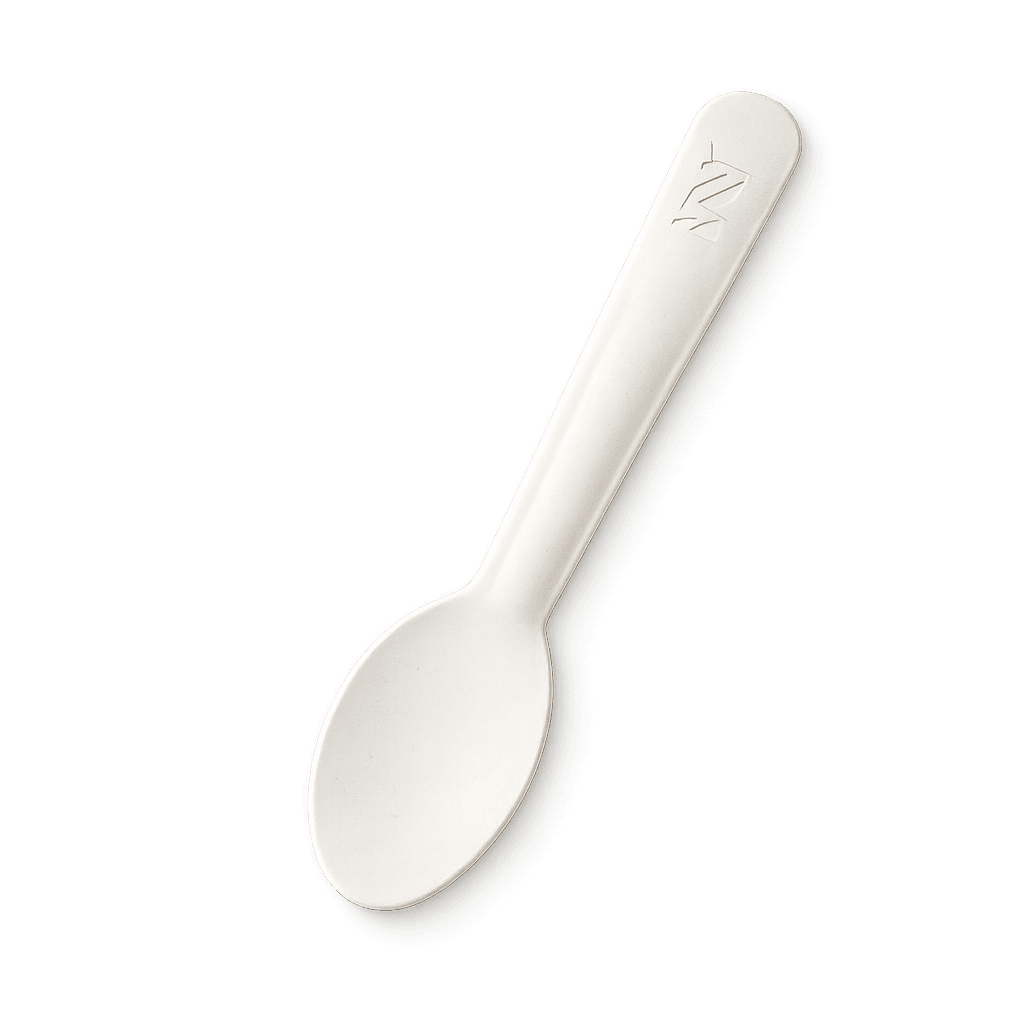
Paper Spoon For Meals: The 2026 catalogue identifies the white meal spoon under EAN 8684266578248 with 100 pieces per pack and 2,000 pieces per carton. A separate 36-piece retail pack uses EAN 8684266578217 and 288 pieces per carton. Keep the two configurations separate in your order. Record the exact item, colour and packaging configuration on the purchase order so receiving staff can identify the approved delivery. Catalogue measurements are a starting point for selection. Request a current dimensional drawing where the unit, tolerance or fit is essential, and avoid inferring an unspecified measurement unit. A sample should represent the same construction as the production item being quoted.
For this paper spoon, start with meal portions and the movement required to scoop the actual recipe. Use the same food, portion weight, contact duration and handling method as your service. Observe any softening, deformation or leakage, and record the result before selecting an item. Include the customer experience as well as the packing operation: handling, eating or drinking and disposal are all relevant. A successful trial in one application does not approve every temperature or recipe. Ask the supplier to confirm the intended conditions of use for the specific item.
Request current documents that identify Paper Spoon For Meals, its material construction and the food-contact conditions covered. Check the coating or barrier specification rather than assuming that all paper products have identical construction. The documents should match the supplied item and destination market. General EU food-contact guidance explains the framework but does not certify this product. Keep the agreed specification, applicable declaration and relevant test information with the purchasing record. Review changes to construction or intended use before accepting a substitute.
Ask for separate confirmation of pieces per inner pack, pieces per carton, cartons per pallet and minimum order quantity. These quantities serve different purposes and should not be substituted for each other. For Paper Spoon For Meals, identify the requested stock or customised configuration and delivery destination. Have the supplier specify price basis, delivery scope and planned dispatch date in writing. Check whether samples, artwork preparation or special packaging affect the quotation. A catalogue carton quantity is not a commitment on stock availability, price or delivery time.
Identify Paper Spoon For Meals as the reference product and explain whether the request concerns individual wrapping, a retail pack or an outer carton. Send the required language, barcode, artwork and order quantity. Ask which customisation options are available for this item before planning a launch. Agree an artwork approval process, pack identification and the current specification with the supplier. Standard stock packaging and a customised configuration may have different production requirements. Confirm the applicable minimum quantity and schedule in the quotation rather than assuming an option is available.
Send the required quantity, destination, food application and sample needs through the quotation form. Include the chosen product identifier and packaging configuration for this paper spoon. Compare the quotation against the approved sample and written specification before ordering. On receipt, check item identification, pack count, condition and agreed documentation. Record any difference before repeating the order. Keep the approved reference and purchasing record together so future deliveries can be assessed consistently, especially when your recipe, service method or destination-market requirements change.