Introduction
The global shift toward sustainable packaging has significantly transformed the food service industry. Businesses worldwide are actively replacing traditional plastic utensils with environmentally responsible alternatives. Among the fastest-growing products in this transition are disposable paper utensils.
Restaurants, cafés, hotels, airlines, catering companies, food delivery services, and event organizers increasingly prefer paper-based disposable cutlery solutions because they combine convenience, sustainability, and food safety. As governments continue implementing stricter plastic regulations and consumers become more environmentally conscious, disposable paper utensils are becoming an essential part of modern food packaging strategies.
Today’s paper utensils are far more advanced than early eco-friendly alternatives. Modern manufacturing technologies allow paper spoons, forks, knives, stirrers, and complete cutlery kits to offer impressive durability, moisture resistance, and user comfort while maintaining recyclability and sustainability.
In this article, we will explore the growing disposable paper utensil industry, manufacturing processes, sustainability benefits, applications, market trends, and what businesses should consider when selecting sustainable cutlery solutions.
What Is a Disposable Paper Utensil?
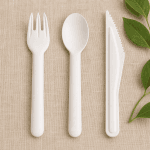
A disposable paper utensil is a single-use eating or serving tool manufactured primarily from food-grade paper materials instead of conventional plastic.
Common paper utensils include:
- Paper forks
- Paper spoons
- Paper knives
- Paper stirrers
- Wrapped cutlery kits
- Dessert utensils
- Ice cream spoons
These products are designed for short-term food service use while reducing environmental impact compared to petroleum-based plastic utensils.
Modern paper utensils are usually produced using:
- FSC-certified paperboard
- Virgin kraft paper
- Multilayer compressed paper
- Compostable coatings
- Food-safe adhesives
High-quality paper utensils provide sufficient strength for both hot and cold food applications.
Why Businesses Are Switching to Disposable Paper Utensils
The demand for sustainable disposable products is rapidly increasing across global food service industries.
Several major factors are driving this transition.
Plastic Ban Regulations
Many governments now restrict or ban:
- Single-use plastic utensils
- Non-recyclable packaging
- Excessive plastic waste
- Harmful food-contact chemicals
Businesses must adapt to evolving environmental regulations.
Consumer Environmental Awareness
Modern consumers increasingly support eco-friendly brands and sustainable packaging initiatives.
Sustainable packaging helps businesses improve:
- Brand image
- Customer loyalty
- ESG performance
- Market competitiveness
Corporate Sustainability Goals
Many international food brands now commit to:
- Reducing plastic waste
- Lowering carbon emissions
- Increasing recyclable packaging usage
- Improving supply chain sustainability
Disposable paper utensils directly support these objectives.
Types of Disposable Paper Utensils
The paper cutlery market now includes a wide range of product options.
Paper Spoons
Commonly used for:
- Ice cream
- Yogurt
- Soups
- Desserts
- Coffee service
Paper Forks
Used in:
- Salad service
- Fast food meals
- Pasta dishes
- Catering operations
Paper Knives
Designed for light food cutting applications such as:
- Pastries
- Pancakes
- Soft foods
Paper Stirring Sticks
Popular in cafés and beverage service industries.
Wrapped Cutlery Sets
Many suppliers provide hygienic cutlery kits for:
- Airlines
- Hotels
- Food delivery services
- Catering companies
How Disposable Paper Utensils Are Manufactured
Manufacturing durable paper cutlery requires advanced engineering and food-safe production systems.
- Raw Material Selection
Manufacturers use sustainable materials such as:
- FSC-certified paper
- Virgin fiber paperboard
- Compostable paper laminates
Material quality directly affects durability and user experience.
- Multilayer Compression Technology
Disposable paper utensils require reinforcement to maintain structural strength.
Manufacturers use:
- High-pressure compression
- Heat lamination
- Multi-layer paper bonding
These processes create rigid utensils capable of handling food without bending easily.
- Precision Die Cutting
Industrial cutting systems shape the utensils into ergonomic forms.
Quality manufacturers ensure:
- Smooth edges
- Consistent sizing
- Comfortable grip
- Safe food-contact surfaces
- Barrier Coating Application
Some products include sustainable coatings for improved:
- Moisture resistance
- Oil resistance
- Heat tolerance
Leading suppliers increasingly use PFAS-free technologies.
- Quality Control
Professional manufacturers conduct rigorous testing for:
- Food safety
- Structural durability
- Heat resistance
- Moisture stability
- Hygiene compliance
Benefits of Disposable Paper Utensils
Paper utensils offer numerous environmental and commercial advantages.
Reduction of Plastic Waste
Paper-based disposable products help reduce:
- Ocean pollution
- Landfill accumulation
- Microplastic contamination
Renewable Resource Usage
Most paper utensils are produced using renewable forestry resources.
Recyclability
Many paper cutlery products can be recycled depending on local recycling systems.
Lower Carbon Footprint
Paper products often generate lower greenhouse gas emissions compared to traditional plastics.
Improved Customer Perception
Consumers increasingly prefer businesses using sustainable packaging.
Regulatory Compliance
Paper utensils help businesses comply with plastic reduction laws and sustainability standards.
Industries Using Disposable Paper Utensils
Sustainable paper cutlery is now widely used across many industries.
Restaurants and Fast Food Chains
Restaurants increasingly replace plastic utensils with paper alternatives.
Coffee Shops and Cafés
Paper utensils are commonly used for:
- Desserts
- Yogurt
- Pastries
- Beverage service
Food Delivery Services
Delivery platforms use sustainable utensils to improve environmental responsibility.
Hotels and Hospitality
Hotels integrate eco-friendly cutlery into:
- Room service
- Catering operations
- Buffet service
Airline Catering
Airlines seek lightweight and sustainable disposable food service products.
Educational Institutions
Schools and universities increasingly adopt environmentally responsible packaging systems.
Key Features of High-Quality Disposable Paper Utensils
Not all paper cutlery products offer the same quality level.
Businesses should evaluate important performance criteria.
Structural Strength
The utensil should resist bending during normal use.
Food Safety Compliance
Reliable products comply with:
- FDA regulations
- EU food-contact standards
- LFGB certification
- FSC certification
PFAS-Free Production
PFAS-free food packaging is becoming a major industry requirement.
Comfortable User Experience
Smooth edges and ergonomic design improve usability.
Moisture Resistance
High-quality utensils maintain performance with hot and cold foods.
OEM and Private Label Paper Utensils
Many businesses now seek customized disposable cutlery solutions.
OEM manufacturing services may include:
- Custom product dimensions
- Logo printing
- Branded packaging
- Wrapped cutlery kits
- Retail-ready packaging
Private label solutions help brands strengthen market differentiation.
Sustainability Trends in the Paper Cutlery Industry
The sustainable packaging industry continues evolving rapidly.
PFAS-Free Packaging Growth
More buyers prioritize chemical-free food packaging solutions.
Premium Sustainable Packaging
Luxury food brands increasingly adopt premium eco-friendly packaging systems.
Improved Paper Engineering
Manufacturers continue developing stronger and more moisture-resistant paper utensils.
Smart Packaging Integration
Some brands now integrate digital experiences and QR technology into packaging systems.
Global Market Expansion
Demand for paper cutlery continues growing strongly across:
- Europe
- North America
- Australia
- Middle East
- Asia-Pacific markets
Challenges in Disposable Paper Utensil Production
Despite strong growth, the industry still faces several challenges.
Cost Competition
Paper utensils may cost more than conventional plastic products.
Recycling Infrastructure Differences
Recycling capabilities vary across regions.
Consumer Disposal Awareness
Consumers sometimes misunderstand disposal requirements.
Product Performance Expectations
Low-quality products can negatively impact customer experience.
Reliable manufacturing standards are essential for long-term success.
The Future of Disposable Paper Utensils
The future of food service packaging is becoming increasingly sustainable.
Expected industry developments include:
- Advanced recyclable coatings
- Carbon-neutral manufacturing
- Zero-waste production systems
- Fully compostable paper technologies
- AI-supported manufacturing optimization
As environmental regulations continue expanding globally, paper-based disposable utensils will become even more important in sustainable food service operations.
Conclusion
Disposable paper utensils are becoming a critical component of modern sustainable packaging systems. Businesses across the food service industry are actively transitioning away from plastic cutlery to environmentally responsible alternatives that improve sustainability performance while maintaining convenience and food safety.
High-quality disposable paper utensils provide:
- Reduced environmental impact
- Regulatory compliance
- Improved customer perception
- Renewable material usage
- Scalable sustainable packaging solutions
As global demand for eco-friendly food packaging continues growing, disposable paper utensils will remain one of the most important innovations shaping the future of sustainable food service packaging.