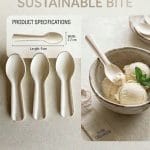
Executive Brief
The future of children’s food packaging is being shaped by a generation of consumers who are growing up in a world where sustainability is no longer optional.
Parents are paying greater attention to packaging materials.
Retailers are strengthening environmental requirements.
Governments are introducing regulations designed to reduce unnecessary plastic consumption.
Food brands are under pressure to demonstrate measurable progress.
As a result, packaging decisions that once focused exclusively on cost and functionality now include additional criteria:
- Sustainability
- Responsible sourcing
- Consumer perception
- Retail acceptance
- Regulatory preparedness
One packaging component increasingly attracting attention is the disposable spoon.
For decades, plastic spoons were considered the default option for children’s food products.
They appeared in:
- Surprise eggs
- Chocolate egg products
- Dairy desserts
- Yogurt cups
- Ice cream packaging
- Promotional food products
- Children’s snack kits
Today, however, brands are exploring alternatives.
Paper spoon solutions are emerging as one of the most practical and commercially viable approaches to reducing plastic use within children’s food packaging.
This guide explores why the market is changing, how paper spoon technology is evolving and why many packaging professionals believe children’s products represent one of the strongest growth opportunities for sustainable disposable cutlery.
Why Children’s Packaging Is Becoming a Sustainability Battleground
Many packaging discussions focus on large-volume categories such as beverage containers, takeaway packaging and food service products.
However, children’s packaging represents a uniquely important segment.
Unlike many adult-oriented products, children’s packaging is evaluated by multiple audiences simultaneously.
A typical children’s product must satisfy:
The Child
The product must remain enjoyable and easy to use.
The Parent
Packaging increasingly influences purchasing decisions.
The Retailer
Retailers are strengthening sustainability requirements.
The Brand
Packaging must support positioning and long-term strategy.
Regulators
Packaging systems increasingly face environmental scrutiny.
This complexity creates challenges but also opportunities.
Small improvements can generate significant visibility because children’s products often receive more attention than standard packaging categories.
A paper spoon may appear insignificant from a manufacturing perspective.
However, from a consumer perspective it becomes one of the most visible sustainability signals within the entire packaging system.
This visibility explains why children’s packaging is becoming one of the most important testing grounds for sustainable packaging innovation.
The Plastic Problem in Children’s Food Packaging
Plastic spoons became dominant because they solved several practical problems.
They were:
- Lightweight
- Cheap
- Durable
- Easy to mass produce
- Compatible with automated packaging systems
For decades these advantages made plastic the obvious choice.
However, the market environment has changed dramatically.
Today, plastic packaging increasingly creates challenges rather than advantages.
Consumer Perception Challenges
Parents increasingly associate excessive plastic use with environmental concerns.
While consumers may not understand the technical details of packaging materials, they immediately recognize visible plastic components.
Disposable spoons often become a focal point because they are handled directly during product consumption.
Retail Pressure
Retailers continue introducing sustainability initiatives that encourage suppliers to reduce unnecessary plastic content.
Products demonstrating visible sustainability improvements often receive stronger retailer support.
Regulatory Uncertainty
Many companies are concerned about future regulatory developments.
Even when current regulations do not prohibit specific products, procurement teams increasingly seek future-proof solutions.
This trend encourages exploration of paper-based alternatives.
The Rise of Sustainable Food Packaging for Kids
The concept of sustainable children’s packaging barely existed twenty years ago.
Today it has become one of the fastest-growing segments of packaging innovation.
Several factors explain this shift.
Parents Are Changing
Modern parents evaluate products differently than previous generations.
Environmental considerations increasingly influence purchasing behavior.
Parents frequently ask questions such as:
- Is this packaging recyclable?
- Does this product contain unnecessary plastic?
- Does the brand demonstrate environmental responsibility?
These questions influence product selection.
Retailers Are Changing
Retailers increasingly prioritize products aligned with sustainability objectives.
This creates additional pressure on manufacturers to innovate.
Brands Are Changing
Food companies increasingly recognize that sustainability influences long-term competitiveness.
Packaging is one of the most visible ways to communicate environmental commitment.
As a result, sustainable packaging investments continue increasing across children’s product categories.
What Is a Paper Spoon for Kids?
A paper spoon for kids is not simply a smaller version of a standard paper spoon.
Children’s applications create unique requirements.
Manufacturers must consider:
Ergonomics
Children use products differently than adults.
Product Compatibility
Different foods require different spoon characteristics.
Packaging Constraints
Children’s packaging often contains limited space.
Safety Considerations
Packaging accessories must support appropriate food-contact requirements.
Consumer Experience
The spoon must contribute positively to the product experience.
As a result, successful paper spoon solutions often involve substantial design and manufacturing expertise.
Why Surprise Egg Manufacturers Are Looking for Alternatives
The surprise egg market represents one of the most interesting opportunities in sustainable packaging.
These products combine:
- Confectionery
- Entertainment
- Children’s experiences
- Packaging innovation
Millions of units are sold annually worldwide.
Because volumes are so high, even small packaging changes can create substantial environmental impact.
Paper spoon solutions offer several advantages.
Highly Visible Sustainability
Consumers immediately notice the spoon.
Strong Storytelling Potential
Brands can communicate sustainability improvements easily.
Retailer Appeal
Retailers increasingly support visible plastic-reduction initiatives.
Consumer Differentiation
Packaging innovation helps products stand out.
For these reasons, many industry observers expect surprise egg applications to become one of the largest future growth categories for paper spoon adoption.
FSC Certification and Responsible Sourcing in Children’s Packaging
As sustainability expectations become more sophisticated, brands are discovering that material changes alone are no longer enough.
Simply replacing plastic with paper does not automatically create a strong sustainability strategy.
Procurement teams, retailers and consumers increasingly want to know:
- Where materials originate
- How they are sourced
- Whether sustainability claims can be verified
- How suppliers manage traceability
This is where FSC certification becomes important.
Why FSC Matters for Children’s Products
Children’s products often receive greater scrutiny than standard consumer goods.
Parents tend to evaluate not only product quality but also the values represented by the brand.
Packaging choices influence these perceptions.
FSC certification provides a framework that supports responsible sourcing and supply-chain transparency.
For brands, this creates several advantages:
Increased Consumer Trust
Consumers increasingly prefer sustainability claims supported by recognized certification systems.
Improved Retail Acceptance
Many retailers prioritize suppliers capable of supporting responsible sourcing initiatives.
Better Procurement Confidence
Buyers gain greater visibility into material sourcing.
Stronger Sustainability Reporting
FSC certification supports ESG initiatives and sustainability documentation.
For children’s packaging, these advantages can be particularly valuable because trust plays a major role in purchasing decisions.
Why European Importers Are Accelerating the Transition
Europe remains one of the most influential markets for sustainable packaging innovation.
Importers throughout Europe increasingly seek alternatives to traditional plastic cutlery.
Several factors explain this trend.
Germany
German buyers are among the most sustainability-focused procurement professionals globally.
Supplier evaluations frequently include:
- Responsible sourcing
- FSC certification
- Plastic reduction initiatives
- Environmental reporting
For many German importers, sustainability has become part of standard procurement practice.
Netherlands
The Netherlands serves as an important logistics hub for Europe.
Many importers distribute products throughout multiple markets.
As a result, Dutch buyers often prioritize future-ready packaging solutions capable of satisfying diverse customer expectations.
Scandinavia
Scandinavian countries frequently lead sustainability initiatives.
Importers often seek products demonstrating:
- Environmental responsibility
- Transparency
- Renewable material usage
Paper spoon solutions align naturally with these priorities.
United Kingdom
British retailers continue strengthening sustainability programs.
Importers increasingly seek suppliers capable of supporting these objectives.
This trend contributes to growing demand for paper-based packaging accessories.
OEM Paper Spoon Manufacturing for Children’s Brands
Every children’s product is different.
Packaging requirements vary dramatically between applications.
A spoon designed for a yogurt cup differs from one designed for:
- Surprise eggs
- Ice cream cups
- Dairy desserts
- Snack kits
- Promotional food products
This is why OEM manufacturing has become increasingly important.
What OEM Manufacturing Provides
OEM manufacturing allows brands to work directly with producers to develop customized solutions.
Benefits include:
Product Optimization
The spoon can be designed according to the intended application.
Packaging Integration
Dimensions can align with existing packaging systems.
Better Consumer Experience
The product can be optimized for usability.
Long-Term Consistency
Direct manufacturing relationships often improve supply reliability.
Sustainability Alignment
Material selection can support broader sustainability objectives.
For brands seeking differentiation, OEM manufacturing creates opportunities unavailable through generic sourcing models.
Private Label Opportunities in Children’s Packaging
Private label packaging continues expanding globally.
Retailers increasingly want sustainable products marketed under their own brands.
Paper spoon solutions fit naturally within these strategies.
Why Private Label Programs Are Growing
Several factors drive growth.
Margin Improvement
Private label products often generate stronger margins.
Brand Ownership
Retailers gain greater control over positioning.
Sustainability Communication
Environmental improvements become easier to communicate.
Customer Loyalty
Unique products strengthen customer relationships.
Paper spoons offer a particularly attractive opportunity because sustainability benefits are highly visible.
Procurement Framework: How to Evaluate a Paper Spoon Supplier
Choosing a supplier requires more than comparing prices.
Professional procurement teams evaluate multiple criteria.
Manufacturing Capability
Can the supplier support future growth?
Product Range
Can the manufacturer serve multiple applications?
FSC Availability
Are certified sourcing options available?
OEM Support
Can custom projects be accommodated?
Export Experience
Can the supplier support international markets?
Quality Control
How is consistency maintained?
Communication Standards
Is the supplier responsive and transparent?
Organizations that evaluate suppliers holistically often achieve stronger long-term outcomes.
Future Trends in Children’s Packaging
The future of children’s food packaging will likely be shaped by several powerful trends.
Increased Plastic Reduction
Brands will continue reducing unnecessary plastic components.
Greater Supply Chain Transparency
Consumers increasingly expect responsible sourcing.
Retail Sustainability Expansion
Retail requirements are expected to become more demanding.
FSC Growth
Certified sourcing will likely become more important.
Expansion of Paper-Based Components
Paper spoons represent only one element of a broader transition toward sustainable packaging systems.
Companies investing early may gain meaningful competitive advantages.
Why Brands Are Choosing Specialized Paper Spoon Manufacturers
The transition from plastic to paper is more complex than changing materials.
Successful implementation often requires expertise in:
- Product development
- Manufacturing
- Packaging integration
- Sustainability strategy
- Export logistics
Specialized paper spoon manufacturers provide these capabilities.
This explains why food brands increasingly prefer strategic manufacturing partnerships rather than purely transactional supplier relationships.
Frequently Asked Questions
What is a paper spoon for kids?
A disposable paper-based spoon designed for children’s food products such as surprise eggs, dairy desserts and confectionery items.
Are paper spoons replacing plastic spoons?
In many applications, yes. Demand continues increasing as sustainability expectations evolve.
Why are surprise egg manufacturers interested in paper spoons?
Because they provide visible sustainability improvements without changing the core consumer experience.
Does FSC certification matter?
Yes. It supports responsible sourcing and supply-chain transparency.
Are paper spoons suitable for OEM projects?
Yes. Many manufacturers support custom development programs.
Which markets are adopting paper spoons fastest?
Europe remains one of the strongest growth regions.
Can paper spoons support private label programs?
Yes. Many retailers and distributors incorporate paper spoon solutions into broader sustainability initiatives.
Conclusion
Children’s packaging is entering a new phase.
Sustainability, transparency and responsible sourcing increasingly influence purchasing decisions.
Paper spoon solutions provide one of the most practical opportunities for brands to reduce plastic use while strengthening environmental positioning.
For surprise egg manufacturers, dairy dessert producers, confectionery brands and retailers, paper spoons offer both commercial and sustainability advantages.
As expectations continue evolving, organizations that adopt sustainable packaging innovations early may gain significant long-term benefits.
Kinder Alternative Strategy: Why the Children’s Confectionery Industry Is Exploring Paper Spoon Solutions
One of the most interesting developments in sustainable food packaging is occurring within the children’s confectionery sector.
Historically, packaging innovation focused primarily on:
- Product formulation
- Branding
- Licensing agreements
- Promotional concepts
Packaging accessories rarely received significant attention.
Today the situation is changing.
Large confectionery companies increasingly recognize that even small packaging components influence sustainability performance and consumer perception.
This is particularly true in surprise egg-style products.
These products combine:
- Food
- Entertainment
- Collectability
- Packaging interaction
The spoon is not merely a utensil.
It becomes part of the experience.
Because of this visibility, replacing a plastic spoon with a paper-based alternative can generate a disproportionately positive sustainability signal.
Why This Matters
Parents frequently purchase children’s confectionery products.
These consumers increasingly evaluate packaging choices.
A visible paper spoon communicates:
- Reduced plastic use
- Sustainability awareness
- Environmental responsibility
without requiring lengthy explanations.
For marketing teams, this visibility creates powerful storytelling opportunities.
For procurement teams, it creates opportunities to align sustainability goals with consumer-facing packaging improvements.
Confectionery Market Analysis
The global confectionery market continues expanding.
Several categories increasingly intersect with sustainable packaging initiatives:
Chocolate-Based Products
Premium chocolate brands increasingly explore environmentally responsible packaging solutions.
Surprise Egg Products
One of the strongest opportunities for paper spoon innovation.
Seasonal Promotions
Holiday campaigns often emphasize sustainability messaging.
Licensed Children’s Products
Brands increasingly seek packaging improvements that align with corporate responsibility objectives.
The common factor across all categories is visibility.
Consumers directly interact with packaging components.
This creates opportunities for sustainable alternatives to influence purchasing decisions.
Dairy Dessert Procurement Guide
Dairy desserts represent another important growth segment.
Products such as:
- Yogurt cups
- Puddings
- Cream desserts
- Dairy snacks
frequently include disposable spoons.
For procurement teams, evaluating paper spoon solutions requires balancing multiple objectives.
Product Compatibility
The spoon must perform appropriately for the intended food application.
Consumer Experience
Functionality remains essential.
Sustainability Objectives
Packaging improvements should support broader environmental initiatives.
Cost Management
Procurement decisions must remain commercially viable.
Supply Reliability
Long-term consistency remains critical.
Organizations increasingly recognize that sustainable packaging decisions should be evaluated holistically rather than focusing exclusively on unit price.
Case Study Example: Children’s Dessert Brand
Imagine a dairy dessert brand distributing 25 million products annually.
Historically, every product included a plastic spoon.
The organization decides to explore paper spoon alternatives.
Objectives include:
- Reducing plastic consumption
- Strengthening sustainability positioning
- Improving retailer acceptance
- Supporting ESG reporting
Results may include:
Improved Sustainability Messaging
Consumers immediately notice the packaging improvement.
Retailer Engagement
Retailers often respond positively to visible sustainability initiatives.
Brand Differentiation
Packaging becomes part of the marketing story.
Procurement Benefits
The organization aligns packaging decisions with broader sustainability goals.
Although every project differs, this example illustrates why paper spoon adoption continues accelerating.
Case Study Example: Surprise Egg Importer
A European importer specializing in children’s confectionery products faces increasing retailer questions regarding sustainability.
Rather than redesigning the entire product portfolio, the importer focuses on packaging accessories.
Paper spoon adoption becomes one of the first initiatives.
Benefits include:
- Reduced visible plastic content
- Stronger sustainability narrative
- Better alignment with retailer expectations
- Improved positioning within environmentally conscious markets
This type of incremental improvement is becoming increasingly common.
The Procurement Decision Matrix
When evaluating paper spoon solutions, procurement teams should consider multiple variables simultaneously.
| Evaluation Factor | Importance |
|---|---|
| Sustainability Goals | High |
| Consumer Visibility | High |
| Retail Acceptance | High |
| Supply Reliability | High |
| Product Performance | High |
| FSC Availability | Medium to High |
| Cost Efficiency | High |
| Long-Term Risk | High |
The most successful organizations evaluate all criteria together rather than optimizing for a single variable.
Additional Frequently Asked Questions
Are paper spoons suitable for ice cream products?
Yes. Ice cream remains one of the strongest application categories for paper spoon solutions.
Can paper spoons support sustainability reporting?
Many organizations include packaging improvements within broader ESG and sustainability programs.
Why are retailers interested in paper spoon solutions?
Because visible sustainability improvements align with retailer objectives and consumer expectations.
Are paper spoons relevant only for premium brands?
No. Sustainable packaging initiatives increasingly influence both premium and mainstream categories.
Can paper spoons be customized?
Yes. OEM manufacturing allows customization according to product and packaging requirements.
Do consumers notice paper spoons?
Yes. Because consumers physically interact with the spoon, it becomes one of the most visible packaging components.
Are paper spoons suitable for private label programs?
Absolutely. Private label retailers increasingly seek sustainable packaging solutions.
What role does FSC certification play?
FSC certification supports responsible sourcing and supply-chain transparency.
Are paper spoons growing globally?
Yes. Demand continues increasing across Europe, North America and many international markets.
Why should brands consider paper spoon manufacturers now?
Because sustainability expectations, retailer requirements and procurement priorities continue evolving rapidly.
Strategic Recommendations for Food Brands
Organizations evaluating paper spoon adoption should consider a phased approach.
Phase 1
Evaluate high-visibility applications.
Examples:
- Children’s products
- Ice cream
- Dairy desserts
Phase 2
Introduce FSC-certified sourcing where appropriate.
Phase 3
Expand sustainable packaging initiatives across additional product categories.
Phase 4
Integrate packaging improvements into sustainability communications.
This approach helps maximize both commercial and environmental benefits.
Children’s food packaging is evolving.
Brands that proactively explore sustainable spoon solutions position themselves more effectively for future consumer expectations, retailer requirements and sustainability objectives.
VAV Paper supports:
- Paper Spoon for Kids
- Surprise Egg Spoon Solutions
- FSC Paper Spoon Manufacturing
- OEM Paper Spoon Production
- Private Label Packaging Programs
Explore:
- /paper-spoon-for-kids/
- /paper-spoon-manufacturer/
- /paper-spoon-oem-manufacturer/
- /products/fsc-paper-spoon/
- /paper-cutlery-manufacturer/
Request a Quote:
The future of children’s packaging will not be defined solely by product innovation.
It will also be shaped by the packaging decisions brands make today.