Introduction
The global food service industry is rapidly transitioning toward environmentally responsible packaging solutions. One of the most important developments in this transformation is the widespread adoption of biodegradable cutlery. Restaurants, cafés, hotels, airlines, catering companies, food delivery platforms, and event organizers are increasingly replacing traditional plastic utensils with sustainable alternatives.
Growing environmental concerns, stricter government regulations, and changing consumer expectations are driving demand for eco-friendly disposable products. Biodegradable cutlery has become one of the most practical and scalable solutions for reducing plastic pollution while maintaining convenience and hygiene in food service operations.
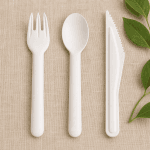
Modern biodegradable cutlery products are designed to offer durability, food safety, sustainability, and commercial efficiency. Manufacturers now produce high-quality forks, knives, spoons, and complete cutlery sets using renewable and compostable materials that help businesses align with environmental goals.
In this article, we will explore what biodegradable cutlery is, how it is manufactured, its environmental benefits, key industry trends, and why sustainable disposable utensils are becoming essential for modern food businesses.
What Is Biodegradable Cutlery?
Biodegradable cutlery refers to disposable eating utensils that naturally break down through biological processes over time without causing long-term environmental pollution.
Unlike traditional petroleum-based plastic utensils, biodegradable cutlery is typically made from renewable or compostable materials such as:
- Paper
- Wood
- Bamboo
- PLA bioplastics
- Plant fibers
- Bagasse
- Cornstarch-based materials
These products are designed to decompose under appropriate environmental conditions, reducing waste accumulation in landfills and oceans.
Biodegradable cutlery usually includes:
- Forks
- Spoons
- Knives
- Stirrers
- Cutlery kits
- Wrapped utensil sets
The primary goal is to replace conventional single-use plastics with environmentally responsible alternatives.
Why Businesses Are Switching to Biodegradable Cutlery
The transition toward sustainable packaging is no longer optional for many businesses.
Governments around the world are implementing regulations restricting:
- Single-use plastics
- Non-recyclable packaging
- Harmful chemical coatings
- Excessive packaging waste
At the same time, consumers increasingly prefer brands that demonstrate environmental responsibility.
Biodegradable cutlery provides several key advantages:
- Reduced environmental impact
- Plastic waste reduction
- Improved sustainability branding
- Regulatory compliance
- Better customer perception
- Renewable raw material usage
- Support for ESG initiatives
Companies that adopt sustainable packaging solutions often strengthen their reputation and improve customer loyalty.
Materials Used in Biodegradable Cutlery
Modern biodegradable cutlery is produced using a variety of sustainable materials.
Paper-Based Cutlery
Paper cutlery has become increasingly popular due to:
- Lightweight structure
- Recyclability
- Renewable sourcing
- Plastic-free composition
Advanced multilayer compression technologies improve strength and moisture resistance.
Wooden Cutlery
Wooden utensils are widely used for:
- Ice cream shops
- Cafés
- Fast food restaurants
- Event catering
Wood is biodegradable and provides a natural appearance preferred by many eco-conscious consumers.
Bamboo Cutlery
Bamboo is one of the fastest-growing renewable resources.
Benefits include:
- High durability
- Natural antibacterial properties
- Premium appearance
- Rapid renewability
Bagasse Cutlery
Bagasse is a byproduct of sugarcane processing.
It offers:
- Compostability
- Renewable sourcing
- Heat resistance
- Reduced agricultural waste
PLA and Plant-Based Bioplastics
PLA (Polylactic Acid) is derived from plant starches such as corn.
PLA cutlery can provide:
- Plastic-like appearance
- Industrial compostability
- Lightweight performance
However, composting conditions may vary depending on local waste infrastructure.
How Biodegradable Cutlery Is Manufactured
Manufacturing sustainable disposable utensils requires advanced engineering and strict food safety standards.
- Sustainable Raw Material Sourcing
Manufacturers carefully select renewable and food-safe materials.
Important considerations include:
- FSC certification
- Compostability
- Moisture resistance
- Food-contact safety
- Supply chain sustainability
- Material Processing
Different materials require different production methods.
Examples include:
- Compression molding
- Heat pressing
- Die cutting
- Injection molding for bioplastics
- Fiber molding technologies
- Structural Reinforcement
High-quality biodegradable cutlery must maintain sufficient strength during food use.
Manufacturers optimize:
- Thickness
- Layer structure
- Density
- Surface treatment
- Surface Coating and Protection
Some products include eco-friendly coatings for improved:
- Moisture resistance
- Oil resistance
- Heat tolerance
Modern sustainable manufacturers increasingly avoid PFAS chemicals.
- Quality Testing
Reliable manufacturers conduct extensive testing for:
- Durability
- Food safety
- Compostability
- Heat resistance
- Hygiene compliance
Benefits of Biodegradable Cutlery
Biodegradable disposable utensils offer significant environmental and commercial advantages.
Reduction of Plastic Pollution
Traditional plastic cutlery contributes heavily to global waste pollution.
Biodegradable alternatives help reduce:
- Ocean pollution
- Landfill accumulation
- Microplastic contamination
Renewable Resource Usage
Most biodegradable products are produced from renewable materials rather than fossil fuels.
Lower Carbon Footprint
Sustainable raw materials often produce lower greenhouse gas emissions during manufacturing.
Improved Brand Image
Consumers increasingly support businesses with strong environmental practices.
Regulatory Compliance
Biodegradable cutlery helps businesses adapt to global plastic reduction regulations.
Versatile Applications
Biodegradable utensils can be used across many industries and food categories.
Industries Using Biodegradable Cutlery
Eco-friendly disposable utensils are now used worldwide across multiple sectors.
Restaurants and Fast Food Chains
Restaurants increasingly replace plastic cutlery with sustainable alternatives.
Coffee Shops and Cafés
Cafés commonly use biodegradable utensils for:
- Desserts
- Yogurt
- Pastries
- Coffee service
Food Delivery Services
Delivery brands use eco-friendly packaging to improve sustainability performance.
Hotels and Hospitality
Hotels integrate sustainable cutlery into:
- Room service
- Buffet operations
- Event catering
Airline Catering
Airlines are reducing plastic waste through lightweight biodegradable solutions.
Educational Institutions
Schools and universities increasingly adopt environmentally responsible food service products.
Key Features of High-Quality Biodegradable Cutlery
Not all biodegradable products offer the same performance level.
Businesses should evaluate several important factors.
Durability
The product should resist bending and breaking during normal use.
Food Safety Compliance
Manufacturers should comply with:
- FDA regulations
- EU food-contact standards
- LFGB certification
- FSC certification
PFAS-Free Production
PFAS-free packaging is becoming increasingly important in sustainable food service.
Compostability
Products should clearly specify:
- Home compostability
- Industrial compostability
- Recycling compatibility
Comfortable User Experience
Smooth edges and ergonomic design improve customer satisfaction.
OEM and Private Label Biodegradable Cutlery
Many businesses now seek customized sustainable packaging solutions.
OEM manufacturing may include:
- Custom dimensions
- Printed packaging
- Brand logos
- Retail-ready packaging
- Wrapped cutlery kits
Private label solutions help businesses differentiate themselves in competitive markets.
Sustainability Trends in the Cutlery Industry
The biodegradable cutlery market continues evolving rapidly.
PFAS-Free Innovation
More buyers now prioritize chemical-free food packaging solutions.
Premium Eco Packaging
Luxury food brands increasingly prefer premium sustainable utensils.
Stronger Material Engineering
Manufacturers continue improving durability and moisture resistance.
Smart Packaging Integration
Some brands now integrate digital experiences into sustainable packaging.
Global Market Expansion
Demand continues growing strongly in:
- Europe
- North America
- Australia
- Middle East
- Asia-Pacific markets
Challenges in Biodegradable Cutlery Adoption
Although sustainable cutlery offers many benefits, some challenges remain.
Cost Differences
Biodegradable products may still cost more than conventional plastic alternatives.
Waste Infrastructure Limitations
Some regions lack industrial composting systems.
Consumer Education
Many consumers remain uncertain about proper disposal methods.
Performance Expectations
Low-quality products can negatively impact customer experience.
For this reason, selecting reliable manufacturers is essential.
The Future of Biodegradable Cutlery
The future of food packaging is becoming increasingly sustainable.
Expected industry developments include:
- Fully compostable barrier technologies
- Carbon-neutral manufacturing
- Advanced recyclable materials
- Zero-waste production systems
- AI-supported manufacturing optimization
As environmental awareness continues growing, biodegradable cutlery will become a standard component of sustainable food service operations.
Conclusion
Biodegradable cutlery represents a major step toward reducing plastic pollution and creating more sustainable food packaging systems. Businesses across the food service industry are increasingly adopting eco-friendly disposable utensils to meet both regulatory requirements and consumer expectations.
High-quality biodegradable cutlery provides:
- Sustainability benefits
- Food safety compliance
- Improved brand perception
- Plastic reduction
- Renewable material usage
As global demand for sustainable packaging continues to rise, biodegradable disposable utensils will remain one of the most important innovations in the future of eco-friendly food service packaging.