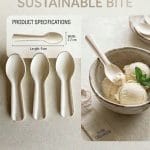
Complete Buyer’s Guide for Ice Cream Manufacturers, Retailers, Distributors and Food Service Operators
Introduction
The global ice cream industry is experiencing a significant transformation driven by sustainability initiatives, consumer preferences, government regulations, and brand differentiation strategies. While much attention is focused on ingredients, packaging, cold chain logistics, and marketing, one component often overlooked can substantially influence customer experience and brand perception: the spoon.
For decades, plastic spoons dominated the ice cream industry due to their low cost and widespread availability. However, increasing environmental concerns and global restrictions on single-use plastics have accelerated the transition toward sustainable alternatives. Among these alternatives, paper spoons have emerged as one of the most promising solutions.
Today, leading ice cream brands, private label manufacturers, distributors, retailers, amusement parks, airlines, food service operators, and hospitality businesses are actively seeking reliable paper spoon solutions that align with both environmental goals and operational requirements.
Choosing the right paper spoon is no longer a simple procurement decision. It involves evaluating:
- Material composition
- Food safety compliance
- Consumer experience
- Sustainability certifications
- Manufacturing quality
- Supply chain reliability
- Brand customization opportunities
- Cost efficiency
- Market regulations
A poorly selected spoon can negatively impact customer satisfaction, product performance, and brand reputation. On the other hand, the right paper spoon can strengthen sustainability messaging, improve customer perception, and support long-term business growth.
This guide provides a comprehensive framework for selecting the ideal paper spoon solution for modern ice cream brands.
For businesses exploring broader sustainable cutlery options, review our guides on Paper Spoon Manufacturing, Disposable Paper Cutlery, and FSC Paper Cutlery Solutions.
Why Ice Cream Brands Are Switching to Paper Spoons
The shift toward paper spoons is driven by several interconnected factors.
Consumer Expectations Have Changed
Modern consumers increasingly expect brands to demonstrate environmental responsibility.
Research consistently shows that:
- Consumers prefer sustainable packaging.
- Younger demographics actively support eco-conscious brands.
- Sustainability influences purchasing decisions.
- Packaging impacts brand perception.
An ice cream brand that still relies on traditional plastic spoons may appear outdated compared to competitors adopting environmentally friendly alternatives.
Single-Use Plastic Regulations
Governments worldwide are implementing restrictions on plastic products.
Major markets including:
- European Union
- United Kingdom
- Canada
- Australia
- United States (state-level regulations)
- Middle East sustainability initiatives
continue tightening requirements regarding disposable plastics.
As regulations evolve, many ice cream manufacturers proactively transition to paper-based solutions to future-proof their operations.
Sustainability Goals
Large food brands increasingly publish ESG reports and sustainability commitments.
Common targets include:
- Plastic reduction
- Recyclable packaging
- Renewable materials
- FSC-certified sourcing
- Carbon footprint reduction
Paper spoons directly support these objectives.
Improved Brand Positioning
Sustainability has become a competitive advantage.
Consumers often associate paper-based utensils with:
- Premium quality
- Environmental responsibility
- Innovation
- Food safety
- Modern brand values
A simple paper spoon can reinforce an entire sustainability narrative.
Understanding Modern Paper Spoon Technology
Many buyers still assume paper spoons resemble weak paper products from years ago.
Modern paper spoon manufacturing is significantly more advanced.
Today’s premium paper spoons utilize:
- Multi-layer paper structures
- Food-grade adhesives
- Compression technologies
- Moisture-resistant engineering
- Reinforced spoon bowls
- Advanced forming processes
These innovations enable paper spoons to withstand real-world food service environments.
Multi-Layer Construction
One of the biggest developments in paper cutlery manufacturing is multi-layer construction.
Instead of a single paper sheet, manufacturers use:
- Multiple FSC-certified paper layers
- Food-contact approved adhesives
- Pressure bonding technology
Benefits include:
- Higher rigidity
- Better durability
- Improved mouthfeel
- Enhanced moisture resistance
This construction significantly improves performance with frozen desserts.
Reinforced Spoon Bowl Design
The spoon bowl is the most critical component.
Weak bowl design can cause:
- Bending
- Cracking
- Layer separation
- Customer dissatisfaction
Premium manufacturers invest heavily in bowl engineering.
Key features include:
- Reinforced edge structures
- Compression molding
- Rounded ergonomic shapes
- Load distribution optimization
These features ensure better performance during consumption.
Key Factors Ice Cream Brands Must Evaluate
Not all paper spoons are created equal.
Choosing solely based on price often leads to problems later.
The following factors should guide supplier evaluation.
Factor 1: Spoon Strength
Strength is the most important performance characteristic.
Ice cream products vary significantly:
Soft Serve
Requires moderate strength.
Gelato
Requires higher strength.
Premium Dense Ice Cream
Requires maximum strength.
Frozen Yogurt
Moderate strength requirement.
Frozen Desserts with Mix-ins
High strength requirement.
The spoon must remain stable throughout the eating experience.
Questions to ask suppliers:
- What load testing is performed?
- What paper thickness is used?
- How many paper layers are included?
- What compression technology is applied?
Factor 2: Moisture Resistance
Ice cream naturally introduces moisture exposure.
Paper spoons should resist:
- Surface softening
- Layer separation
- Structural collapse
- Edge deformation
High-quality paper spoon manufacturers engineer products specifically for cold and moist environments.
Testing should include:
- Frozen product exposure
- Extended contact duration
- Real-world consumption simulations
Factor 3: Consumer Comfort
Customer experience matters.
Consumers interact directly with the spoon.
Poor ergonomics can negatively affect perceptions of the entire product.
Consider:
- Spoon shape
- Edge smoothness
- Surface texture
- Mouth comfort
- Handle design
Premium brands prioritize user experience.
Factor 4: Food Safety Compliance
Food safety cannot be compromised.
Paper spoon suppliers should provide documentation including:
- Food contact declarations
- Migration testing
- Manufacturing quality certifications
- Material traceability
International buyers often require compliance with:
- FDA standards
- EU food contact regulations
- LFGB requirements
- GMP principles
Food safety documentation should be reviewed before supplier approval.
Factor 5: Sustainability Credentials
Environmental claims must be verifiable.
Look for certifications such as:
FSC Certification
Responsible forest sourcing.
Chain of Custody Verification
Material traceability.
Recyclability Documentation
Supports sustainability communication.
Third-Party Testing
Independent performance verification.
Brands increasingly require documented sustainability evidence.
The Importance of FSC Certification
FSC certification has become one of the strongest indicators of responsible sourcing.
Consumers increasingly recognize FSC logos as proof that paper products originate from responsibly managed forests.
Benefits include:
- Greater consumer trust
- Improved retailer acceptance
- Enhanced ESG reporting
- Stronger sustainability positioning
Many global buyers now prioritize FSC-certified paper cutlery suppliers.
How Spoon Design Impacts Brand Perception
Packaging influences purchasing decisions.
Utensils influence consumption experience.
Together they create a unified brand impression.
A premium ice cream product paired with a weak spoon creates inconsistency.
Consumers may subconsciously perceive:
- Lower product quality
- Poor brand attention to detail
- Reduced trust
Conversely, a high-quality paper spoon reinforces premium positioning.
Paper Spoon Sizes for Different Applications
Different applications require different dimensions.
Mini Spoon (80–95 mm)
Ideal for:
- Sample servings
- Tasting events
- Promotional activities
- Children’s portions
Standard Ice Cream Spoon (95–120 mm)
Ideal for:
- Retail cups
- Ice cream parlors
- Frozen yogurt
- Gelato service
Extended Spoon (120–160 mm)
Ideal for:
- Deep cups
- Specialty desserts
- Layered frozen products
- Premium serving formats
Custom Dimensions
OEM manufacturers can develop custom dimensions based on:
- Packaging geometry
- Consumer demographics
- Brand requirements
- Product consistency
Why OEM Manufacturing Matters
Many successful ice cream brands choose OEM manufacturing partnerships.
OEM production enables:
- Custom sizing
- Private labeling
- Unique branding
- Exclusive designs
- Differentiated customer experiences
Rather than using generic spoons, brands can create customized solutions aligned with their market positioning.
Section Summary
The foundation of selecting the right paper spoon begins with understanding:
✓ Consumer expectations
✓ Regulatory pressures
✓ Spoon strength
✓ Moisture resistance
✓ Food safety
✓ Sustainability certifications
✓ Brand experience
✓ OEM opportunities
Global Ice Cream Market Trends Driving Demand for Paper Spoons
The paper spoon market cannot be evaluated independently from the broader ice cream industry.
Over the past decade, consumer purchasing behavior has evolved dramatically. Sustainability is no longer a niche marketing concept; it is increasingly integrated into procurement, packaging development, retailer requirements, and investor expectations.
As a result, ice cream brands are reviewing every component of the customer experience—including disposable utensils.
Sustainability Is Becoming a Purchasing Requirement
Historically, sustainability was viewed as a brand enhancement.
Today, many retailers consider sustainability a supplier requirement.
Major retail chains increasingly evaluate:
- Packaging recyclability
- Material sourcing
- Plastic reduction initiatives
- Carbon footprint strategies
- FSC certification status
This trend creates indirect pressure on ice cream brands to upgrade all packaging components.
A paper spoon becomes part of a larger sustainability ecosystem.
Foodservice Operators Are Adopting Paper Cutlery
Foodservice channels increasingly demand alternatives to plastic utensils.
Examples include:
- Ice cream chains
- Frozen yogurt stores
- Dessert cafes
- Theme parks
- Entertainment venues
- Hotels
- Airline catering companies
- Educational institutions
These sectors often distribute millions of utensils annually.
Even a small transition from plastic to paper can significantly reduce plastic consumption.
Premium Positioning Through Sustainable Packaging
Many ice cream brands are repositioning themselves as premium products.
Premium consumers often associate sustainable materials with:
- Better quality
- Better sourcing
- Better ethics
- Better corporate responsibility
Paper spoons support premium branding initiatives without changing the core product.
Understanding Different Ice Cream Consumption Scenarios
Not every paper spoon is designed for the same environment.
A supplier should understand where and how the spoon will be used.
Ice Cream Parlors
Requirements:
- Immediate consumption
- Frequent customer handling
- Fast serving environment
Priority factors:
- Comfort
- Rigidity
- Brand appearance
Retail Packaged Ice Cream
Requirements:
- Long-term packaging integration
- Transportation durability
- Storage compatibility
Priority factors:
- Consistent dimensions
- Packaging compatibility
- Food safety compliance
Airline Catering
Requirements:
- Compact size
- Lightweight construction
- Reliable performance
Priority factors:
- Weight optimization
- Space efficiency
- International compliance
Airline programs often involve very large procurement volumes.
Hospitality and Hotel Buffets
Requirements:
- Premium appearance
- Guest satisfaction
- Sustainability positioning
Priority factors:
- Elegant design
- Smooth finish
- Brand consistency
Children’s Ice Cream Products
Requirements:
- Safety
- Comfortable dimensions
- Attractive presentation
Priority factors:
- Rounded edges
- Appropriate sizing
- Child-friendly design
Cost Analysis: Paper Spoon vs Plastic Spoon
One of the most common procurement questions is:
“Are paper spoons more expensive than plastic spoons?”
The answer depends on how cost is evaluated.
Direct Purchase Cost
Historically:
Plastic Spoon = Lower unit cost
Paper Spoon = Slightly higher unit cost
However, procurement decisions should not rely solely on unit price.
Total Brand Cost
A broader analysis includes:
- Regulatory risks
- Brand positioning
- Sustainability value
- Customer perception
- Future compliance requirements
When these factors are included, the economic comparison becomes more balanced.
Marketing Value
Brands often spend significant budgets on sustainability campaigns.
A paper spoon acts as a visible sustainability statement at every customer interaction.
This marketing value can exceed the incremental cost difference.
Retail Acceptance Benefits
Some retailers increasingly favor environmentally responsible products.
Benefits may include:
- Easier onboarding
- Better category positioning
- Improved buyer perception
- Enhanced retailer relationships
Hidden Costs of Low-Quality Paper Spoons
Many buyers focus exclusively on price.
This often creates larger costs later.
Customer Complaints
Weak spoons may:
- Bend during use
- Break unexpectedly
- Feel uncomfortable
- Create negative impressions
A poor customer experience damages brand equity.
Product Returns
Retail complaints may increase if utensils fail consistently.
Negative Reviews
Consumers increasingly share packaging experiences online.
Poor utensil quality can appear in:
- Social media posts
- Product reviews
- Marketplace ratings
Brand Reputation Damage
Premium ice cream served with a poor-quality spoon creates a mismatch between product quality and customer experience.
How to Evaluate Paper Spoon Suppliers
Supplier evaluation should be systematic.
Many procurement teams use structured scorecards.
Criterion 1: Manufacturing Capability
Questions to ask:
- How many production lines exist?
- What is the daily capacity?
- What machinery is used?
- How scalable is production?
Large-scale suppliers generally offer better consistency and reliability.
Criterion 2: Production Experience
Experience matters.
Ask:
- How many years has the supplier manufactured paper cutlery?
- Which export markets are served?
- Which food sectors are supplied?
Relevant experience reduces operational risk.
Criterion 3: Export Experience
International shipments involve:
- Customs procedures
- Documentation
- Packaging standards
- Regulatory compliance
Experienced exporters typically provide smoother operations.
Criterion 4: Quality Systems
A professional supplier should operate documented quality control procedures.
Look for:
- Incoming material inspections
- Process monitoring
- Final product inspections
- Traceability systems
Criterion 5: Certification Portfolio
Common certifications may include:
- FSC
- BRC
- ISO systems
- Food-contact testing
Certification demonstrates organizational maturity.
Why Quality Control Matters
A paper spoon appears simple.
However, multiple variables influence final quality.
Raw Material Quality
Paper composition affects:
- Strength
- Durability
- Moisture resistance
Raw material consistency is critical.
Adhesive Performance
Food-grade adhesives must provide:
- Structural integrity
- Consumer safety
- Environmental compatibility
Poor adhesive selection can cause layer separation.
Compression Consistency
Manufacturing pressure directly impacts:
- Rigidity
- Thickness
- Durability
Professional manufacturers carefully monitor production parameters.
Dimensional Accuracy
Inconsistent dimensions create packaging problems.
OEM customers often require:
- Precise lengths
- Controlled tolerances
- Repeatable production
Third-Party Testing and Verification
Independent testing provides additional confidence.
Common testing partners include:
- Intertek
- SGS
- Bureau Veritas
- TÜV organizations
Testing may evaluate:
- Food-contact compliance
- Material safety
- Structural performance
- Chemical migration
Independent verification strengthens procurement decisions.
Understanding Food Contact Regulations
Global markets require compliance with specific food-contact regulations.
European Union
The EU maintains strict requirements for food-contact materials.
Key focus areas include:
- Chemical migration
- Consumer safety
- Material traceability
United States
FDA-related food-contact expectations influence supplier qualification.
United Kingdom
Post-Brexit requirements remain closely aligned with food safety expectations.
Canada
Canadian buyers increasingly request supporting compliance documentation.
Middle East
Many regional importers require internationally recognized testing reports.
Supplier Risk Assessment Framework
Every procurement decision involves risk.
Paper spoon suppliers should be evaluated across multiple dimensions.
Operational Risk
Questions include:
- Can production continue during demand spikes?
- Is backup capacity available?
- Are critical materials secured?
Financial Risk
Evaluate:
- Business stability
- Long-term viability
- Growth capacity
Supply Chain Risk
Assess:
- Raw material sourcing
- Supplier diversification
- Logistics reliability
Regulatory Risk
Review:
- Certification validity
- Testing documentation
- Export compliance
The Importance of Manufacturing Transparency
Leading manufacturers openly share information regarding:
- Production facilities
- Quality systems
- Certifications
- Testing programs
Transparency increases buyer confidence.
Questions Every Ice Cream Brand Should Ask Before Purchasing
Before selecting a supplier, procurement teams should request detailed information.
Manufacturing Questions
- What is your daily production capacity?
- How many production lines operate?
- Can capacity expand seasonally?
Quality Questions
- What inspections occur during production?
- How is consistency maintained?
- What quality documentation is available?
Sustainability Questions
- Is FSC-certified material available?
- Are sustainability claims documented?
- Can certification copies be provided?
Food Safety Questions
- What food-contact testing exists?
- Which markets are covered?
- Are declarations of conformity available?
OEM Questions
- Can custom dimensions be produced?
- Are private label programs available?
- What are MOQ requirements?
Building a Long-Term Supplier Partnership
The best procurement decisions focus on partnerships rather than transactions.
Long-term relationships provide:
- Stable pricing
- Better planning
- Faster development
- Improved communication
- Joint innovation opportunities
Many successful ice cream brands work with the same packaging suppliers for years.
Private Label Opportunities
Private label ice cream continues growing globally.
Paper spoons can support private label differentiation through:
- Custom dimensions
- Custom packaging
- Printed wrappers
- Private branding
- Sustainable positioning
This creates additional value beyond basic functionality.
Ice Cream Brand Procurement Checklist
Before approving a paper spoon supplier, verify:
✓ Food-contact compliance
✓ FSC certification availability
✓ Quality management systems
✓ Export experience
✓ Manufacturing capacity
✓ Testing documentation
✓ Consistent dimensions
✓ Moisture resistance
✓ Consumer comfort
✓ OEM capability
✓ Long-term scalability
✓ Sustainability support
Section Summary
The most successful ice cream brands evaluate paper spoon suppliers based on:
- Total value rather than unit price
- Manufacturing capability
- Quality systems
- Food safety compliance
- Sustainability credentials
- OEM flexibility
- Long-term partnership potential
A structured procurement process significantly reduces supply chain risk while improving product quality and customer satisfaction.
Why FSC-Certified Paper Spoons Matter
Sustainability claims have become increasingly scrutinized by consumers, retailers, regulators, and investors.
Simply stating that a product is environmentally friendly is no longer sufficient.
Modern buyers expect verifiable evidence.
This is where FSC certification becomes one of the most valuable assets in paper spoon sourcing.
What Is FSC?
Forest Stewardship Council is an international non-profit organization that promotes responsible forest management.
FSC certification helps ensure that paper materials originate from responsibly managed forests and controlled sources.
For ice cream brands, FSC certification provides confidence that sustainability claims are supported by documented sourcing practices.
Why Retailers Prefer FSC-Certified Products
Major retailers increasingly evaluate sustainability throughout the supply chain.
FSC certification offers:
- Supply chain transparency
- Improved sustainability reporting
- Responsible sourcing verification
- Consumer trust enhancement
- Reduced greenwashing concerns
Many retail buyers now actively request FSC-certified alternatives during supplier evaluations.
Consumer Perception Benefits
Consumers may not fully understand packaging regulations.
However, they often recognize trusted environmental certifications.
FSC logos communicate:
- Responsible sourcing
- Environmental awareness
- Sustainable procurement
- Corporate responsibility
These signals contribute to stronger brand perception.
Sustainability Is No Longer a Trend
Many businesses still view sustainability as a marketing initiative.
In reality, sustainability increasingly affects:
- Purchasing decisions
- Retail approvals
- Investor expectations
- Government regulations
- Corporate procurement policies
The ice cream industry is becoming part of this transition.
The Shift Away From Single-Use Plastics
Global regulatory momentum continues to favor alternatives to conventional plastic products.
Key drivers include:
- Plastic waste reduction targets
- Circular economy initiatives
- Corporate sustainability commitments
- Consumer pressure
Paper spoons fit naturally within these objectives.
Building a Sustainable Brand Experience
Customers do not evaluate packaging components individually.
Instead, they evaluate the overall experience.
This includes:
- Cup
- Lid
- Wrapper
- Secondary packaging
- Spoon
Each element contributes to the sustainability narrative.
A sustainable ice cream cup paired with a plastic spoon creates inconsistency.
A fully integrated paper-based solution creates a stronger brand message.
Custom Branding Opportunities
Many ice cream brands underestimate the marketing value of utensils.
Every spoon represents a direct interaction between the consumer and the brand.
This interaction can be leveraged strategically.
Printed Paper Wrappers
One of the most popular customization methods is printed individual wrapping.
Printed wrappers can include:
- Brand logo
- Website URL
- Sustainability message
- QR codes
- Promotional campaigns
- Product information
Millions of brand impressions can be generated annually through customized wrappers.
Custom Spoon Dimensions
Different products require different user experiences.
Custom sizing allows brands to optimize:
- Portion access
- Comfort
- Packaging compatibility
- Product presentation
Custom Packaging Formats
Paper spoons can be supplied in various packaging configurations.
Examples include:
Bulk Packaging
Suitable for:
- Foodservice operators
- Ice cream chains
- Catering companies
Individually Wrapped
Suitable for:
- Retail products
- Airline catering
- Hospitality programs
Multipack Integration
Suitable for:
- Supermarket products
- Family packs
- Promotional kits
OEM Paper Spoon Manufacturing Process
Developing a custom paper spoon involves more than simply changing dimensions.
Professional OEM projects follow structured development stages.
Stage 1: Requirement Analysis
The process begins by understanding the application.
Key questions include:
- What type of ice cream is served?
- What is the target market?
- Which countries are involved?
- What sustainability requirements exist?
- What certifications are required?
Detailed planning reduces future complications.
Stage 2: Design Engineering
Manufacturers evaluate:
- Spoon geometry
- Bowl depth
- Handle length
- Thickness requirements
- Structural reinforcement
Engineering decisions directly affect performance.
Stage 3: Prototype Development
Prototype production enables real-world testing.
Testing typically evaluates:
- Consumer comfort
- Product compatibility
- Structural integrity
- Branding appearance
Prototype approval minimizes production risk.
Stage 4: Performance Testing
Professional manufacturers conduct testing before mass production.
Areas may include:
- Strength testing
- Moisture resistance
- Transportation simulation
- Packaging compatibility
Testing validates design assumptions.
Stage 5: Mass Production
Once approval is complete, production begins.
Critical focus areas include:
- Process consistency
- Quality monitoring
- Documentation
- Traceability
Packaging Integration Considerations
A paper spoon should never be evaluated independently.
It must integrate seamlessly into the overall packaging system.
Cup Compatibility
The spoon must fit:
- Product dimensions
- Cup geometry
- Consumption requirements
Improper sizing can reduce usability.
Secondary Packaging Compatibility
Retail products often include:
- Cartons
- Sleeves
- Display boxes
The spoon must work within these systems.
Transportation Efficiency
Packaging design influences logistics efficiency.
Optimized dimensions improve:
- Container utilization
- Storage density
- Transportation economics
Global Importer Considerations
Importers face additional responsibilities beyond product selection.
Regulatory Documentation
Importers frequently request:
- Food contact declarations
- Test reports
- Certification copies
- Product specifications
Comprehensive documentation simplifies customs and compliance processes.
Consistent Supply
Importers prioritize suppliers capable of supporting long-term growth.
Questions include:
- Can capacity scale?
- Can lead times remain stable?
- Are raw materials secure?
Reliable supply is essential for retail programs.
Export Packaging Quality
International transportation places significant stress on packaging.
Export-ready suppliers implement:
- Protective carton design
- Moisture control strategies
- Pallet optimization
- Shipping documentation procedures
Distributor Programs
Paper spoon distributors increasingly support:
- Foodservice sectors
- Packaging wholesalers
- Retail supply chains
- Hospitality groups
Distributor-friendly suppliers offer:
- Stable inventory
- Consistent specifications
- Marketing support
- Technical documentation
Logistics Optimization
Transportation costs increasingly affect procurement decisions.
Paper spoon design influences logistics performance.
Container Utilization
Efficient product dimensions improve:
- Loading density
- Freight economics
- Warehouse efficiency
Even small design changes can create significant savings at scale.
Weight Optimization
Paper spoons are generally lightweight.
Optimized designs can further reduce:
- Freight costs
- Carbon emissions
- Storage requirements
Ice Cream Industry Segments and Paper Spoon Requirements
Not all ice cream businesses operate in the same way. Product formats, consumer expectations, serving conditions, and sustainability objectives vary significantly across different sectors. As a result, the ideal paper spoon for one business may not be the ideal solution for another.
Understanding these differences is critical when selecting a paper spoon supplier and developing an effective procurement strategy.
Paper Spoons for Traditional Ice Cream Brands
Traditional packaged ice cream remains one of the largest market segments globally.
These products are commonly sold through:
- Supermarkets
- Convenience stores
- Grocery chains
- Hypermarkets
- Retail distributors
In this segment, consistency is the primary requirement.
Ice cream manufacturers need paper spoons that provide:
- Stable dimensions
- Reliable quality
- Long-term supply continuity
- Competitive cost structures
- Consistent branding opportunities
Because production volumes are often measured in millions of units annually, even minor inconsistencies can create significant operational challenges.
Professional manufacturers therefore prioritize:
- Dimensional control
- Batch consistency
- Automated quality inspection
- Supply chain reliability
Paper Spoons for Premium Ice Cream Brands
Premium ice cream products target consumers who value quality, craftsmanship, and sustainability.
For these brands, the spoon becomes part of the product experience.
Consumers purchasing premium products expect:
- Superior aesthetics
- Comfortable ergonomics
- Premium feel
- Sustainable materials
A weak or poorly designed spoon can undermine the premium positioning of an otherwise exceptional product.
Premium brands frequently request:
- Customized dimensions
- Enhanced rigidity
- Individually wrapped solutions
- Branded packaging
- FSC-certified materials
The paper spoon effectively becomes a brand ambassador.
Paper Spoons for Gelato Brands
Gelato differs significantly from conventional ice cream.
Its density, texture, and serving style create unique requirements.
Gelato spoons must provide:
- Higher structural strength
- Greater resistance to bending
- Enhanced bowl performance
- Improved consumer comfort
Because gelato is often served in artisan environments, visual presentation also becomes important.
Many gelato brands prefer custom paper spoon solutions that reinforce their premium identity.
Paper Spoons for Frozen Yogurt Chains
Frozen yogurt operations often emphasize:
- Health-conscious consumers
- Sustainable branding
- Modern retail concepts
Paper spoons align naturally with these values.
Frozen yogurt chains typically prioritize:
- Sustainability messaging
- FSC certification
- Lightweight construction
- Cost efficiency
Many frozen yogurt brands also implement strong environmental marketing programs, making paper spoons an important component of their customer experience strategy.
Paper Spoons for Children’s Ice Cream Products
Children represent a specialized market segment.
Paper spoons designed for children’s products require:
- Rounded edges
- Smaller dimensions
- Enhanced safety characteristics
- Attractive presentation
Parents increasingly evaluate packaging sustainability when purchasing children’s products.
As a result, paper spoons support both safety objectives and environmental positioning.
Paper Spoons for Airline Catering
Airline catering programs involve unique operational requirements.
Millions of meals are distributed annually through global airline networks.
Airline buyers typically evaluate:
- Weight
- Space efficiency
- Packaging compatibility
- International compliance
- Cost optimization
Paper spoons offer several advantages:
- Lightweight design
- Reduced plastic consumption
- Strong sustainability messaging
As airlines continue expanding ESG initiatives, paper cutlery adoption is expected to increase significantly.
Paper Spoons for Hospitality and Resorts
Hotels and resorts increasingly seek sustainable alternatives throughout their foodservice operations.
Ice cream is commonly served in:
- Restaurants
- Buffets
- Poolside venues
- Room service programs
In these environments, guest perception becomes critical.
High-quality paper spoons contribute to:
- Premium guest experiences
- Sustainability objectives
- Brand differentiation
Many hospitality groups now include sustainability criteria within supplier selection processes.
Paper Spoons for Theme Parks and Entertainment Venues
Theme parks serve enormous numbers of desserts annually.
Key procurement priorities include:
- Volume scalability
- Cost control
- Operational simplicity
- Consumer safety
Paper spoons offer an attractive solution for operators seeking to reduce plastic usage while maintaining customer satisfaction.
Paper Spoon Engineering: What Makes a High-Performance Ice Cream Spoon?
Many buyers evaluate paper spoons primarily based on appearance.
However, performance is determined by engineering.
Understanding the engineering principles behind paper spoon manufacturing helps buyers make more informed decisions.
Raw Material Selection
The foundation of every paper spoon is the paper itself.
Material selection influences:
- Strength
- Durability
- Consumer comfort
- Moisture resistance
Premium manufacturers carefully evaluate paper properties before production.
Factors include:
- Fiber composition
- Density
- Surface quality
- Mechanical performance
Material quality directly affects final product performance.
Fiber Structure
Paper consists of interconnected fibers.
Fiber quality determines:
- Structural integrity
- Compression performance
- Durability
Longer, stronger fibers generally improve product strength.
Manufacturers carefully balance performance requirements with sustainability objectives when selecting raw materials.
Multi-Layer Construction Technology
Modern paper spoons are rarely produced from a single sheet.
Instead, manufacturers utilize multiple layers bonded together through advanced production processes.
Benefits include:
- Increased rigidity
- Enhanced durability
- Better moisture resistance
- Improved consumer experience
Multi-layer construction has become an industry standard for premium paper cutlery.
Compression Engineering
Compression technology represents one of the most important aspects of paper spoon manufacturing.
During production, paper layers are compressed under controlled conditions.
Compression influences:
- Product density
- Structural strength
- Surface quality
- Durability
Poor compression can result in:
- Weakness
- Layer separation
- Inconsistent performance
Professional manufacturers invest heavily in process optimization.
Bowl Design Engineering
The bowl portion of the spoon experiences the greatest stress during use.
Engineering considerations include:
- Depth
- Curvature
- Load distribution
- Edge reinforcement
Well-designed spoon bowls maintain their shape even when used with dense frozen desserts.
Handle Reinforcement
Consumers apply significant force through the handle.
Handle engineering affects:
- Comfort
- Rigidity
- Control
Premium manufacturers optimize handle geometry to balance strength and usability.
Moisture Resistance Design
Ice cream naturally creates moisture exposure.
Paper spoon designs must withstand:
- Condensation
- Surface moisture
- Extended contact times
Advanced manufacturing techniques help maintain structural integrity throughout consumption.
Consumer Ergonomics
Ergonomics refers to how comfortably a consumer interacts with the spoon.
Factors include:
- Handle shape
- Bowl geometry
- Surface texture
- Edge smoothness
Consumer comfort directly affects overall product satisfaction.
Quality Testing Procedures
Professional manufacturers implement extensive testing programs.
Typical evaluations include:
Load Testing
Measures structural performance under force.
Flex Testing
Evaluates bending resistance.
Moisture Exposure Testing
Assesses durability under realistic conditions.
Dimensional Verification
Ensures consistency.
Visual Inspection
Identifies manufacturing defects.
These testing procedures help ensure reliable performance across large production volumes.
Why Supplier Innovation Matters
The paper cutlery industry continues evolving rapidly.
Forward-thinking manufacturers invest in:
- Material science
- Production technologies
- Sustainability improvements
- Performance enhancements
Innovation creates competitive advantages for customers.
Emerging Trends in Ice Cream Packaging
Several trends are shaping future procurement decisions.
Fully Plastic-Free Packaging Systems
Many brands are moving toward:
- Paper cups
- Paper lids
- Paper spoons
- Fiber packaging
Integrated systems improve sustainability performance.
Premium Sustainable Branding
Consumers increasingly associate sustainability with quality.
Brands leverage this relationship to strengthen premium positioning.
Increased Certification Requirements
Retailers continue expanding sustainability expectations.
Certifications will likely become even more important in supplier qualification.
Enhanced Consumer Transparency
Future packaging may include:
- QR traceability
- Sustainability reporting
- Material origin information
Transparency is becoming a competitive differentiator.
Future of Paper Spoons in the Ice Cream Industry
The long-term outlook remains highly positive.
Several factors support continued growth:
- Regulatory pressure
- Consumer demand
- Retail requirements
- Sustainability commitments
- Technological advancements
Paper spoons are increasingly becoming a standard component of modern sustainable packaging programs.
Common Mistakes Ice Cream Brands Make
Many procurement teams repeat similar mistakes.
Avoiding these errors improves outcomes significantly.
Choosing Based Only on Price
Lowest-cost products often generate hidden costs later.
Ignoring User Experience
Consumers directly interact with the spoon.
Performance matters.
Overlooking Certifications
Documentation supports both compliance and credibility.
Underestimating Supply Capacity
Growth requires scalable manufacturing partners.
Skipping Prototype Testing
Real-world testing reduces risk before full implementation.
Strategic Procurement Framework
The most successful ice cream brands evaluate suppliers across five areas:
Performance
- Strength
- Durability
- Comfort
Compliance
- Food safety
- Testing
- Certifications
Sustainability
- FSC sourcing
- Environmental documentation
Commercial Capability
- Capacity
- Lead times
- Export experience
Partnership Potential
- Communication
- Innovation
- Long-term support
This framework produces better procurement decisions than price-focused purchasing.
Section Summary
A successful paper spoon program depends on:
✓ FSC-certified sourcing
✓ Verified sustainability claims
✓ Strong branding opportunities
✓ OEM development capabilities
✓ Reliable export operations
✓ Scalable manufacturing
✓ Documentation support
✓ Long-term supplier partnerships
✓ Future-focused innovation
Ultimate Buyer Checklist for Ice Cream Brands
Before approving any paper spoon supplier, procurement teams should conduct a structured evaluation process.
Use the following checklist during supplier qualification.
Product Performance
✓ Spoon remains rigid during consumption
✓ Suitable for frozen products
✓ Comfortable mouthfeel
✓ Smooth edge finishing
✓ No layer separation
✓ Consistent dimensions
✓ Appropriate bowl depth
✓ Appropriate handle length
✓ Suitable for target consumers
✓ Real-world performance testing completed
Food Safety
✓ Food contact declaration available
✓ Migration testing completed
✓ Raw material traceability available
✓ Manufacturing controls documented
✓ Product specifications available
✓ Batch tracking system established
✓ Quality records maintained
Sustainability
✓ FSC-certified material available
✓ Chain of Custody documentation available
✓ Sustainability claims documented
✓ Environmental policies available
✓ Responsible sourcing evidence provided
Manufacturing Capability
✓ Production capacity verified
✓ Multiple production lines available
✓ Backup production capability exists
✓ Export packaging standards established
✓ Capacity expansion possible
✓ Long-term growth support available
Commercial Capability
✓ Stable lead times
✓ Competitive pricing
✓ OEM capabilities
✓ Private label options
✓ Custom packaging options
✓ Technical support available
Supplier Audit Checklist
Professional ice cream brands often perform supplier audits before approval.
Below is a practical audit framework.
Factory Assessment
Evaluate:
Facility Organization
Questions:
- Is the facility clean?
- Are production areas organized?
- Are materials stored correctly?
Production Equipment
Questions:
- Is equipment maintained?
- Is capacity sufficient?
- Are production systems modern?
Workforce Competency
Questions:
- Are employees trained?
- Are procedures documented?
- Are responsibilities clearly defined?
Quality Control Audit
Verify:
Incoming Material Inspection
Raw materials should be inspected before production.
In-Process Inspection
Production should be monitored continuously.
Final Inspection
Finished products should be verified before shipment.
Traceability Systems
Manufacturers should be able to identify:
- Raw materials
- Production dates
- Production batches
- Shipment records
Sustainability Audit
Verify:
FSC Documentation
Review:
- Certification validity
- Scope coverage
- Chain of Custody status
Material Sourcing
Understand:
- Paper origin
- Supplier approval processes
- Sustainability policies
Export Readiness Audit
For international buyers, export readiness is critical.
Review:
Export Documentation
- Commercial invoices
- Packing lists
- Compliance declarations
- Test reports
Packaging Systems
- Carton strength
- Pallet stability
- Transportation protection
Logistics Experience
- Export history
- Destination markets
- Freight coordination capability
Paper Spoon Procurement Scorecard
A practical evaluation model can simplify supplier selection.
| Category | Weight |
|---|---|
| Product Performance | 25% |
| Food Safety | 20% |
| Sustainability | 15% |
| Manufacturing Capability | 15% |
| Export Experience | 10% |
| Commercial Conditions | 10% |
| Innovation Capability | 5% |
This structure encourages balanced decision-making.
How Large Ice Cream Brands Select Suppliers
Large international brands rarely choose suppliers based solely on price.
Their evaluation process typically includes:
Stage 1
Supplier screening
Stage 2
Documentation review
Stage 3
Prototype testing
Stage 4
Factory assessment
Stage 5
Commercial negotiation
Stage 6
Pilot production
Stage 7
Full approval
This systematic approach minimizes risk and improves long-term supply stability.
Future Innovations in Paper Spoon Manufacturing
The paper spoon industry continues evolving rapidly.
Several innovations are expected to shape the next decade.
Improved Fiber Engineering
Future materials may provide:
- Greater strength
- Better moisture resistance
- Lower material consumption
Advanced Compression Technologies
Manufacturers continue improving:
- Structural performance
- Consistency
- Production efficiency
Smart Packaging Integration
Future packaging may incorporate:
- QR codes
- Traceability systems
- Sustainability reporting
Lower Carbon Manufacturing
Manufacturers increasingly invest in:
- Energy efficiency
- Renewable energy
- Reduced emissions
Why Ice Cream Brands Should Act Now
Many companies delay sustainability transitions until regulations force action.
However, early adopters typically gain advantages.
Benefits include:
- Stronger brand positioning
- Retailer preference
- Consumer loyalty
- Operational experience
- Market differentiation
Waiting often reduces strategic flexibility.
The Strategic Role of Paper Spoons
A paper spoon may appear to be a minor component.
In reality, it influences:
- Customer experience
- Sustainability perception
- Brand identity
- Regulatory readiness
- Retail acceptance
Every consumer interaction matters.
The spoon becomes part of the overall brand story.
Paper Spoon vs Plastic Spoon, Global Regulations, Carbon Footprint Analysis, Packaging Ecosystem and Industry Case Studies
Paper Spoon vs Plastic Spoon: Complete Comparison for Ice Cream Brands
For decades, plastic spoons dominated the ice cream industry due to their low cost, wide availability, and manufacturing efficiency. However, sustainability concerns, consumer expectations, and regulatory changes have fundamentally altered procurement priorities.
Today, ice cream brands increasingly compare paper and plastic spoons not only from a cost perspective but also through the lenses of sustainability, brand value, regulatory compliance, and long-term market positioning.
Material Origin
Plastic Spoon
Traditional plastic spoons are generally manufactured from petroleum-based materials.
Common plastics include:
- Polystyrene (PS)
- Polypropylene (PP)
- Polyethylene (PE)
These materials rely on fossil fuel extraction and industrial refining processes.
Paper Spoon
Paper spoons are produced using renewable fiber-based raw materials.
Premium manufacturers often utilize FSC-certified paper sources.
Benefits include:
- Renewable resource utilization
- Responsible forestry support
- Improved sustainability credentials
This distinction increasingly influences procurement decisions.
Consumer Perception
Consumer perception often has greater commercial impact than technical specifications.
Plastic Spoon Perception
Many consumers associate plastic spoons with:
- Single-use waste
- Environmental concerns
- Outdated packaging systems
This perception has intensified over the past decade.
Paper Spoon Perception
Paper spoons are frequently associated with:
- Sustainability
- Innovation
- Corporate responsibility
- Modern packaging solutions
For environmentally conscious consumers, this perception can positively influence brand preference.
Brand Value Comparison
Packaging components communicate brand values.
Plastic Spoon
May communicate:
- Cost-focused procurement
- Traditional packaging approaches
Paper Spoon
May communicate:
- Sustainability commitment
- Premium positioning
- Environmental awareness
Increasingly, brands use paper cutlery as part of their broader ESG narrative.
Regulatory Risk
One of the largest differences between paper and plastic spoons involves future regulatory exposure.
Plastic Spoons
Face growing scrutiny from:
- National governments
- Regional authorities
- Retail procurement teams
Future restrictions may affect:
- Availability
- Distribution
- Compliance requirements
Paper Spoons
Generally align more closely with:
- Plastic reduction initiatives
- Sustainable procurement programs
- Corporate environmental goals
This creates lower long-term regulatory uncertainty.
Retail Acceptance
Retail buyers increasingly evaluate sustainability criteria.
Paper spoon solutions often support:
- Sustainable packaging initiatives
- Retail ESG objectives
- Corporate responsibility programs
As a result, paper-based solutions may receive more favorable consideration during supplier evaluations.
Understanding the Global Regulatory Landscape
Regulations continue driving packaging innovation.
Ice cream brands must understand how policy developments affect procurement decisions.
European Union Single-Use Plastics Directive
The most influential regulation affecting disposable packaging globally is the European Union Single-Use Plastics Directive.
European Union policies have accelerated demand for alternative materials across numerous industries.
The directive aims to reduce environmental impacts associated with plastic waste.
For foodservice packaging, this has encouraged the adoption of paper-based alternatives.
Impact on Ice Cream Brands
European ice cream producers increasingly evaluate:
- Plastic reduction opportunities
- Alternative materials
- Sustainable packaging systems
Paper spoons frequently become part of broader compliance strategies.
United Kingdom Packaging Trends
Following broader sustainability initiatives, the UK market continues emphasizing:
- Responsible sourcing
- Waste reduction
- Sustainable procurement
Retailers increasingly favor suppliers capable of supporting these objectives.
Canada
Canadian sustainability initiatives continue encouraging reduced reliance on conventional disposable plastics.
Foodservice operators increasingly seek:
- Renewable materials
- Responsible sourcing
- Sustainable alternatives
United States
While regulations vary by state, sustainability trends continue influencing purchasing decisions.
Many major food brands operating within the United States are implementing voluntary plastic reduction programs.
Australia
Australian foodservice operators increasingly adopt environmentally responsible packaging systems.
Paper-based utensils continue gaining acceptance across hospitality and retail sectors.
Middle East Sustainability Initiatives
The Middle East is becoming an increasingly important market for sustainable food packaging.
Government initiatives, hospitality developments, and international foodservice brands continue driving demand for alternative materials.
Many regional importers now actively request FSC-certified packaging solutions.
Carbon Footprint Considerations
Environmental discussions increasingly focus on carbon emissions.
Procurement teams often evaluate packaging through carbon reduction frameworks.
Why Carbon Matters
Many organizations have established goals related to:
- Carbon reduction
- Emission reporting
- Net-zero commitments
Packaging decisions increasingly contribute to these objectives.
Packaging and ESG Reporting
Large organizations frequently publish Environmental, Social, and Governance reports.
Packaging components influence:
- Sustainability metrics
- Environmental disclosures
- Corporate reporting initiatives
Paper spoons may support broader sustainability narratives.
Life Cycle Thinking in Packaging Procurement
Modern procurement increasingly evaluates products throughout their entire lifecycle.
This approach is often called Life Cycle Thinking.
Key considerations include:
Raw Material Sourcing
Where do materials originate?
Manufacturing
How are products produced?
Transportation
How are products distributed?
Consumption
How are products used?
End-of-Life Management
How are products handled after use?
Lifecycle thinking helps procurement teams make more informed decisions.
The Ice Cream Packaging Ecosystem
A paper spoon should not be evaluated independently.
It forms part of a complete packaging ecosystem.
Paper Cups
Many brands transitioning to paper spoons are also evaluating paper cup solutions.
Together they create stronger sustainability consistency.
Paper Lids
Paper lids continue emerging as alternatives to conventional plastic lids.
Integrated systems create a cohesive sustainability message.
Paper Trays
Foodservice and takeaway operators increasingly adopt paper trays for desserts and snacks.
Secondary Packaging
Secondary packaging may include:
- Cartons
- Sleeves
- Retail boxes
These components contribute to overall sustainability performance.
Packaging Consistency
Consumers notice consistency.
When every packaging component supports the same sustainability message, brand credibility increases.
Case Study 1: Premium European Gelato Chain
A premium gelato chain sought to strengthen its sustainability positioning.
Objectives included:
- Plastic reduction
- Enhanced customer perception
- Premium presentation
Solution:
- FSC-certified paper spoons
- Custom dimensions
- Branded wrappers
Results:
- Improved sustainability messaging
- Stronger premium perception
- Positive customer feedback
Case Study 2: Private Label Retail Ice Cream Program
A supermarket private label brand reviewed packaging components.
Objectives:
- Differentiate from competitors
- Support retailer sustainability goals
- Improve packaging consistency
Solution:
- Transition from generic plastic spoons to paper spoon solutions
Benefits:
- Enhanced shelf positioning
- Stronger sustainability narrative
- Better alignment with retailer expectations
Case Study 3: Airline Catering Provider
An airline catering supplier sought alternatives to conventional disposable cutlery.
Requirements:
- Lightweight construction
- Consistent dimensions
- International compliance
Paper spoon solutions supported:
- Sustainability targets
- Weight optimization
- Brand objectives
Case Study 4: Children’s Ice Cream Brand
A children’s dessert brand focused on:
- Safety
- Sustainability
- Parent trust
Implementation included:
- Rounded paper spoon designs
- FSC-certified materials
- Child-friendly packaging
The program supported both safety and environmental objectives.
Case Study 5: Middle East Food Distributor
A regional distributor sought sustainable foodservice products for hospitality customers.
Requirements:
- Reliable export supply
- Consistent quality
- Strong documentation
Paper spoon solutions enabled expansion into sustainability-focused market segments.
Advanced Procurement Strategies
Leading brands increasingly integrate sustainability into procurement frameworks.
Evaluation criteria may include:
Product Performance
Can the spoon perform effectively?
Food Safety
Is compliance documented?
Sustainability
Are claims verifiable?
Supply Reliability
Can the supplier support growth?
Innovation
Can future requirements be supported?
Building Competitive Advantage Through Sustainable Packaging
Sustainability increasingly influences market competition.
Brands using sustainable packaging solutions may benefit from:
- Improved customer loyalty
- Stronger retailer relationships
- Better ESG positioning
- Enhanced brand differentiation
Paper spoons contribute directly to these outcomes.
Why Packaging Details Matter
Consumers interact physically with packaging.
Every touchpoint influences perception.
These touchpoints include:
- Cup
- Lid
- Wrapper
- Spoon
The spoon may appear small, but it is often the first item a consumer handles.
As a result, it contributes significantly to the overall product experience.
OEM Ice Cream Spoon Manufacturing: Complete Development Guide
Many successful ice cream brands eventually discover that standard, off-the-shelf paper spoons cannot fully support their growth objectives.
As competition increases, brands seek differentiation.
This is where OEM paper spoon manufacturing becomes an important strategic advantage.
OEM (Original Equipment Manufacturing) enables ice cream brands to develop customized spoon solutions specifically designed for their products, customers, and packaging systems.
Rather than adapting the product to a generic spoon, the spoon is designed around the product.
Why Ice Cream Brands Choose OEM Manufacturing
There are several reasons why brands invest in custom paper spoon programs.
Brand Differentiation
The ice cream market is highly competitive.
Consumers often encounter dozens of similar products.
Custom paper spoons help create a unique customer experience.
Better Packaging Integration
Standard spoons may not fit perfectly within existing packaging systems.
OEM solutions optimize:
- Spoon dimensions
- Packaging compatibility
- Storage efficiency
- Consumer usability
Sustainability Positioning
Custom programs enable brands to integrate sustainability messaging directly into packaging systems.
Examples include:
- FSC messaging
- QR codes
- Environmental claims
- Brand sustainability commitments
Long-Term Cost Optimization
While custom development requires initial investment, large-volume programs often benefit from:
- Improved efficiency
- Better logistics
- Reduced packaging waste
- Stronger supplier relationships
The OEM Development Process
Professional manufacturers typically follow a structured development process.
Step 1: Discovery Phase
Objectives are clearly defined.
Questions include:
- Which products will use the spoon?
- Which countries are targeted?
- What sustainability goals exist?
- What certifications are required?
- What annual volumes are expected?
The more detailed the project brief, the better the final outcome.
Step 2: Engineering Review
The manufacturer evaluates:
- Product requirements
- Structural requirements
- Consumer expectations
- Packaging limitations
Engineering teams determine the optimal design approach.
Step 3: Prototype Design
Prototype development allows concepts to become physical products.
Variables include:
- Length
- Width
- Thickness
- Bowl geometry
- Handle design
Several iterations may be evaluated before approval.
Step 4: Performance Testing
Testing verifies real-world functionality.
Areas evaluated include:
Structural Strength
Can the spoon handle dense ice cream products?
Moisture Resistance
Can it maintain performance during consumption?
Ergonomic Comfort
Does it provide a pleasant user experience?
Packaging Compatibility
Does it integrate correctly into the final package?
Step 5: Pilot Production
Before full commercialization, pilot production confirms process stability.
Pilot programs help identify potential issues before large-scale manufacturing begins.
Step 6: Mass Production
Once validation is complete, full production can begin.
At this stage, manufacturers focus on:
- Consistency
- Traceability
- Quality assurance
- Supply reliability
Private Label Ice Cream Spoon Programs
Private label products continue growing globally.
Retailers increasingly launch their own brands to improve margins and customer loyalty.
Private label programs often require:
- Customized packaging
- Consistent supply
- Regulatory compliance
- Sustainable positioning
Paper spoons align well with these objectives.
Advantages of Private Label Programs
Benefits include:
Increased Brand Recognition
Every packaging component reinforces brand identity.
Sustainability Storytelling
Private label brands increasingly emphasize sustainability.
Retailer Differentiation
Retailers compete not only on price but also on perceived value.
Paper spoons contribute to that value proposition.
Wholesale Paper Spoon Supply
Large-scale distribution requires different capabilities than direct manufacturing.
Wholesale programs support:
- Importers
- Distributors
- Foodservice wholesalers
- Packaging suppliers
Each segment has unique requirements.
Foodservice Wholesalers
Foodservice distributors prioritize:
- Inventory availability
- Consistent specifications
- Reliable lead times
Paper spoons must support operational efficiency across thousands of customer locations.
Packaging Distributors
Packaging distributors frequently supply:
- Restaurants
- Ice cream chains
- Catering companies
- Hospitality groups
These customers increasingly request sustainable alternatives.
Regional Importers
Importers often represent large geographic markets.
Key priorities include:
- Export readiness
- Documentation
- Stable supply
- Product consistency
Building a Global Distribution Network
Many paper spoon manufacturers export to multiple continents.
Successful global distribution depends on:
Manufacturing Scale
Can production support international demand?
Documentation Systems
Can compliance documentation be provided quickly?
Logistics Coordination
Can shipments be managed efficiently?
Inventory Planning
Can demand fluctuations be accommodated?
FSC-Certified Ice Cream Spoon Procurement Guide
Sustainability procurement has become increasingly sophisticated.
Large buyers no longer accept generic environmental claims.
Instead, they seek documented proof.
Understanding FSC Chain of Custody
One of the most important concepts in sustainable procurement is Chain of Custody.
This system helps verify that certified materials remain traceable throughout the supply chain.
Benefits include:
- Transparency
- Accountability
- Credibility
For ice cream brands, this supports sustainability reporting and responsible sourcing objectives.
Why Procurement Teams Prefer FSC-Certified Suppliers
Certified suppliers often provide:
- Better documentation
- Improved traceability
- Greater transparency
- Stronger sustainability credentials
These factors simplify supplier approval processes.
Sustainability Reporting Requirements
Many organizations publish annual sustainability reports.
Packaging decisions increasingly influence these reports.
Common reporting categories include:
- Plastic reduction
- Sustainable sourcing
- Environmental impact reduction
- Responsible procurement
Paper spoons can support these initiatives.
ESG and Packaging Procurement
Environmental, Social, and Governance frameworks continue influencing purchasing decisions.
Packaging components increasingly contribute to:
Environmental Goals
Reduction of environmental impact.
Social Goals
Responsible sourcing practices.
Governance Goals
Documented compliance systems.
How Retailers Evaluate Sustainable Packaging
Retail buyers increasingly assess suppliers based on sustainability criteria.
Questions often include:
- Is the material certified?
- Is sourcing documented?
- Are claims verifiable?
- Is traceability available?
FSC-certified paper spoons help answer these questions positively.
Advanced Supplier Selection Framework
Many procurement teams use weighted evaluation models.
Example:
| Criteria | Weight |
|---|---|
| Product Performance | 25% |
| Food Safety | 20% |
| Sustainability | 15% |
| Capacity | 15% |
| Export Capability | 10% |
| Cost Competitiveness | 10% |
| Innovation | 5% |
This framework balances short-term and long-term considerations.
Future Opportunities for Ice Cream Brands
The next decade is likely to bring significant changes.
Expected developments include:
Expanded Plastic Reduction Regulations
Governments continue pursuing waste reduction objectives.
Higher Consumer Expectations
Consumers increasingly reward sustainable brands.
Greater Retail Sustainability Requirements
Retailers continue raising procurement standards.
Packaging Innovation
Material science continues improving paper cutlery performance.
Stronger Sustainability Reporting
Organizations increasingly measure environmental performance.
Strategic Recommendations for Ice Cream Brands
Brands seeking long-term success should consider the following actions:
Conduct Packaging Audits
Evaluate current packaging systems.
Review Sustainability Objectives
Align packaging with corporate goals.
Engage Qualified Suppliers
Work with experienced manufacturers.
Prioritize Documentation
Ensure claims can be verified.
Plan for Future Regulations
Adopt proactive rather than reactive strategies.
Additional FAQ
36. What is OEM paper spoon manufacturing?
A customized manufacturing program designed around specific customer requirements.
37. Can paper spoons be developed for unique packaging formats?
Yes. OEM programs frequently include custom dimensions and packaging compatibility solutions.
38. Are private label paper spoon programs available?
Many manufacturers offer private label development services.
39. Why do retailers prefer FSC-certified products?
Because certification supports transparency and responsible sourcing.
40. How does Chain of Custody work?
It helps verify that certified materials remain traceable throughout the supply chain.
41. Are paper spoons suitable for global distribution?
Yes. Professional manufacturers export paper spoon solutions worldwide.
42. What should importers prioritize?
Documentation, consistency, compliance, and supply reliability.
43. Why is pilot production important?
Pilot production validates manufacturing stability before full-scale commercialization.
44. Can custom wrappers support marketing campaigns?
Absolutely. Printed wrappers can reinforce branding and promotional initiatives.
45. How do paper spoons support ESG programs?
They contribute to sustainability goals, responsible sourcing, and environmental reporting initiatives.
Section Summary
OEM paper spoon manufacturing provides ice cream brands with opportunities to:
✓ Differentiate products
✓ Improve customer experience
✓ Strengthen sustainability positioning
✓ Support retailer expectations
✓ Enhance packaging integration
✓ Improve long-term competitiveness
✓ Build stronger supplier partnerships
✓ Prepare for future regulatory developments
Additional Premium FAQ
26. Do consumers notice sustainable utensils?
Yes. Consumers increasingly recognize and appreciate environmentally responsible packaging components.
27. Are paper spoons suitable for premium brands?
Absolutely. Many premium brands utilize paper cutlery to reinforce sustainability positioning.
28. Can paper spoons support ESG goals?
Yes. Paper spoons often contribute to broader sustainability initiatives.
29. Are FSC-certified paper spoons preferred by retailers?
Many retailers increasingly favor certified sustainable packaging solutions.
30. Can paper spoons improve brand image?
They can strengthen perceptions of environmental responsibility and innovation.
31. What is lifecycle thinking?
A method of evaluating environmental impacts across a product’s full lifecycle.
32. Why are global regulations important?
Regulations increasingly influence packaging choices and procurement decisions.
33. Do paper spoons support plastic reduction goals?
Yes. Many organizations adopt paper cutlery specifically to reduce plastic consumption.
34. Are custom printed wrappers available?
Most professional OEM manufacturers offer printed wrapper programs.
35. Why is supplier innovation important?
Innovative suppliers are better positioned to support future market requirements.
Section Summary
Paper spoons are increasingly viewed not simply as disposable utensils but as strategic packaging components.
Their importance extends across:
✓ Sustainability initiatives
✓ Consumer perception
✓ Regulatory readiness
✓ Retail acceptance
✓ ESG reporting
✓ Brand positioning
✓ Long-term competitiveness
Premium FAQ Section
1. Why are ice cream brands switching to paper spoons?
Because consumers, retailers and regulators increasingly prefer sustainable alternatives to single-use plastics.
2. Are paper spoons strong enough for ice cream?
High-quality multi-layer paper spoons are specifically engineered for frozen dessert applications and can provide excellent performance.
3. What is the ideal paper spoon size for ice cream?
Most ice cream applications use spoons between 95 mm and 120 mm.
4. Are paper spoons suitable for gelato?
Yes. Premium paper spoons are commonly used for gelato products.
5. Can paper spoons replace plastic spoons completely?
In many ice cream applications, paper spoons are already replacing conventional plastic spoons.
6. What certifications should buyers look for?
FSC certification and food-contact compliance documentation are among the most important.
7. What does FSC certification mean?
It indicates that paper materials originate from responsibly managed forests and controlled sources.
8. Are paper spoons recyclable?
Recyclability depends on local waste management systems and product construction.
9. Are paper spoons compostable?
Some paper spoon constructions may support compostability programs depending on materials and regional infrastructure.
10. Can paper spoons be customized?
Yes. Dimensions, packaging and branding can often be customized through OEM manufacturing.
11. What is OEM paper spoon manufacturing?
OEM manufacturing allows brands to develop custom products according to specific requirements.
12. Can wrappers be printed?
Yes. Individually wrapped spoons can often feature custom printing.
13. What industries use paper spoons?
Ice cream, frozen yogurt, airline catering, hospitality, retail food packaging and foodservice sectors.
14. Are paper spoons food-safe?
Professional manufacturers provide food-contact compliance documentation and testing.
15. How should suppliers be evaluated?
Consider performance, compliance, sustainability, capacity, export experience and partnership potential.
16. What testing should suppliers provide?
Food-contact testing, migration testing and product performance validation are commonly requested.
17. What are the benefits of private-label paper spoons?
Private-label programs support brand differentiation and marketing visibility.
18. Do retailers prefer sustainable packaging?
Many retailers increasingly favor environmentally responsible packaging solutions.
19. What is the biggest mistake buyers make?
Selecting suppliers solely based on price.
20. What is the future of paper cutlery?
Continued growth driven by sustainability requirements and technological improvements.
21. Are paper spoons suitable for airline catering?
Yes. Lightweight paper spoons are widely suitable for airline meal programs.
22. Can paper spoons be supplied globally?
Experienced manufacturers export paper spoons to international markets worldwide.
23. How important is manufacturing capacity?
Capacity is critical for supporting large-scale and seasonal demand.
24. What documentation should importers request?
Food-contact declarations, certifications, specifications and test reports.
25. Why is supplier transparency important?
Transparency improves confidence, compliance management and long-term partnership success.
Conclusion
Choosing the right paper spoon for an ice cream brand involves much more than selecting a disposable utensil.
The ideal solution must balance:
- Consumer experience
- Product performance
- Food safety
- Sustainability
- Regulatory compliance
- Operational efficiency
- Long-term scalability
As global markets continue moving toward sustainable packaging systems, paper spoons are becoming an increasingly important component of modern ice cream packaging strategies.
Brands that invest in high-quality paper spoon solutions today position themselves for stronger customer relationships, improved sustainability performance and greater long-term competitiveness.
Global Buyer Mistakes, Ice Cream Packaging Trends 2030 and Advanced Procurement FAQ
The 20 Most Common Mistakes Ice Cream Brands Make When Purchasing Paper Spoons
Selecting a paper spoon supplier may appear straightforward. However, procurement teams frequently make costly mistakes that affect customer satisfaction, operational efficiency, and long-term profitability.
Understanding these common mistakes can significantly improve purchasing outcomes.
Mistake 1: Buying Only on Price
This is the most common mistake in the industry.
A lower unit price does not necessarily mean lower overall cost.
Poor-quality spoons may result in:
- Customer complaints
- Product failures
- Negative reviews
- Retailer dissatisfaction
Total value should always be evaluated alongside purchase price.
Mistake 2: Ignoring Consumer Experience
Consumers interact directly with the spoon.
A poor user experience can affect perceptions of the entire product.
Evaluate:
- Comfort
- Rigidity
- Smoothness
- Ease of use
Mistake 3: Skipping Real-World Testing
Laboratory specifications alone are insufficient.
Products should be tested using actual ice cream applications.
Evaluate performance with:
- Soft serve
- Gelato
- Frozen yogurt
- Premium dense ice cream
Mistake 4: Underestimating Seasonal Demand
Ice cream demand fluctuates significantly.
Suppliers should be capable of supporting seasonal demand spikes.
Mistake 5: Ignoring Supply Chain Risk
Supply continuity is often more valuable than minor price savings.
Consider:
- Raw material sourcing
- Production capacity
- Backup planning
- Inventory management
Mistake 6: Failing to Verify Certifications
Always verify certification validity.
Documentation should be current and applicable.
Mistake 7: Choosing Inexperienced Export Suppliers
International logistics require expertise.
Experienced exporters help avoid delays and compliance issues.
Mistake 8: Overlooking Packaging Compatibility
The spoon must integrate seamlessly into existing packaging systems.
Mistake 9: Focusing Only on Current Needs
Evaluate future growth requirements as well.
Mistake 10: Treating the Spoon as a Commodity
The spoon influences:
- Customer experience
- Brand perception
- Sustainability positioning
It should be considered a strategic packaging component.
Mistake 11: Ignoring Retail Expectations
Retail buyers increasingly evaluate sustainability initiatives.
Mistake 12: Not Considering ESG Goals
Packaging increasingly contributes to ESG reporting.
Mistake 13: Inadequate Supplier Audits
Supplier qualification should be systematic.
Mistake 14: Poor Forecasting
Accurate demand forecasting improves supply stability.
Mistake 15: Weak Documentation Management
Maintain organized compliance documentation.
Mistake 16: Lack of Sustainability Strategy
Paper spoons should support broader sustainability objectives.
Mistake 17: Insufficient Communication
Strong supplier relationships improve performance.
Mistake 18: Delaying Sustainability Transitions
Early adopters often gain competitive advantages.
Mistake 19: Overlooking Innovation
Innovative suppliers create long-term value.
Mistake 20: Short-Term Thinking
Strategic procurement focuses on long-term outcomes.
Ice Cream Packaging Trends Toward 2030
The next decade will transform food packaging.
Several major trends are already emerging.
Trend 1: Fully Plastic-Free Packaging Systems
Many brands are moving toward integrated solutions.
Examples include:
- Paper cups
- Paper lids
- Paper spoons
- Paper trays
- Fiber packaging
Consumers increasingly expect comprehensive sustainability efforts.
Trend 2: Sustainable Packaging as a Brand Asset
Historically, packaging served a functional purpose.
Today it also serves marketing objectives.
Packaging communicates:
- Brand values
- Corporate responsibility
- Product quality
Paper spoons contribute directly to this communication.
Trend 3: Increased Transparency
Consumers increasingly seek information regarding:
- Material sourcing
- Manufacturing practices
- Environmental impacts
Transparency is becoming a competitive advantage.
Trend 4: QR-Based Traceability
Future packaging may include:
- Supply chain information
- Sustainability reports
- Product origin details
QR codes simplify consumer access to information.
Trend 5: Stronger Retail Sustainability Requirements
Retail procurement standards continue evolving.
Suppliers increasingly require:
- Certifications
- Traceability
- Documentation
Trend 6: Circular Economy Integration
Packaging systems increasingly support circular economy principles.
These initiatives focus on:
- Resource efficiency
- Waste reduction
- Responsible sourcing
Trend 7: Premium Sustainable Experiences
Consumers increasingly associate sustainability with premium quality.
This trend benefits brands investing in environmentally responsible packaging.
Trend 8: Carbon Reporting Expansion
Carbon measurement programs continue expanding globally.
Packaging components increasingly contribute to emissions calculations.
Trend 9: Supply Chain Transparency
Visibility across the supply chain is becoming increasingly important.
Trend 10: Greater Regulatory Complexity
Future regulations will likely require more detailed compliance management.
Proactive suppliers help brands navigate evolving requirements.
Building a Long-Term Sustainable Packaging Strategy
The most successful brands treat packaging strategically.
A structured approach typically includes:
Step 1: Assess Current Packaging
Evaluate:
- Materials
- Performance
- Sustainability profile
Step 2: Define Objectives
Common goals include:
- Plastic reduction
- Improved sustainability
- Retail compliance
Step 3: Identify Opportunities
Determine where improvements can create value.
Step 4: Engage Qualified Suppliers
Collaborate with experienced manufacturers.
Step 5: Pilot New Solutions
Test before large-scale implementation.
Step 6: Measure Results
Track:
- Customer feedback
- Operational performance
- Sustainability outcomes
Advanced Procurement FAQ
46. How often should suppliers be reviewed?
Most organizations conduct annual reviews and periodic audits.
47. Can paper spoons support premium pricing strategies?
Yes. Sustainable packaging often enhances perceived value.
48. Are paper spoons suitable for export markets?
Yes. Professional manufacturers support global distribution programs.
49. Why is traceability important?
Traceability improves transparency and compliance management.
50. What is the ideal supplier relationship?
A long-term partnership focused on continuous improvement.
51. How important is production capacity?
Capacity is essential for supporting growth and seasonal demand.
52. What role does innovation play?
Innovation supports future competitiveness and product development.
53. Should sustainability influence procurement?
Increasingly, yes. Sustainability affects retailers, consumers, and regulators.
54. How can brands reduce packaging risk?
Through supplier qualification, testing, and strategic planning.
55. Are custom paper spoon projects expensive?
Costs vary depending on design complexity and production volume.
56. Can paper spoons support corporate sustainability goals?
Yes. Many organizations integrate paper cutlery into broader sustainability programs.
57. Why are FSC-certified products increasingly important?
Because they provide credible evidence of responsible sourcing.
58. What documentation should suppliers provide?
Specifications, certifications, compliance declarations, and testing reports.
59. What are the benefits of printed wrappers?
They strengthen branding and consumer engagement.
60. How do retailers evaluate sustainable packaging?
Retailers increasingly assess certifications, traceability, and environmental claims.
61. Can paper spoons improve customer loyalty?
Sustainability initiatives often strengthen customer relationships.
62. Are paper spoons suitable for hospitality programs?
Yes. Many hotels and resorts utilize sustainable cutlery solutions.
63. What are the biggest future opportunities?
Plastic reduction, premium positioning, and sustainability leadership.
64. How can brands prepare for future regulations?
By adopting proactive packaging strategies today.
65. Why is sustainable packaging becoming essential?
Because consumer expectations, retailer requirements, and regulatory frameworks continue evolving.
Final Thoughts
Choosing the right paper spoon is no longer a simple purchasing decision.
It is a strategic decision that influences:
- Consumer perception
- Sustainability performance
- Retail acceptance
- Regulatory readiness
- Brand differentiation
- Long-term competitiveness
For ice cream brands seeking future growth, paper spoons represent far more than disposable utensils. They are an integral part of a broader sustainable packaging strategy capable of creating meaningful value across the entire customer journey.
Global Sourcing, Manufacturing Excellence, Quality Assurance and Supplier Comparison Framework
Global Sourcing Strategy for Ice Cream Brands
As ice cream companies expand internationally, procurement decisions become increasingly complex.
The supplier selected today may impact operations for years.
Therefore, sourcing strategy should focus on long-term stability rather than short-term pricing advantages.
Understanding Total Cost of Ownership (TCO)
Many procurement teams focus on unit cost.
However, experienced purchasing professionals evaluate Total Cost of Ownership.
TCO includes:
- Product cost
- Freight cost
- Storage cost
- Inventory carrying cost
- Compliance cost
- Supplier management cost
- Risk cost
A supplier offering a lower unit price may actually create higher overall costs.
Evaluating International Suppliers
When sourcing globally, buyers should examine several critical factors.
Manufacturing Capability
Questions include:
- How many production lines operate?
- What is the daily output?
- Can capacity scale?
Financial Stability
Long-term supplier viability matters.
Procurement teams should assess:
- Business maturity
- Investment levels
- Growth trajectory
Market Experience
Experience within food packaging sectors often indicates stronger operational systems.
Export Competence
International shipments require:
- Documentation expertise
- Regulatory awareness
- Logistics coordination
Single Source vs Multi Source Procurement
Many organizations debate whether to work with one supplier or multiple suppliers.
Single Source Advantages
Benefits include:
- Stronger relationships
- Better pricing opportunities
- Simplified communication
- Easier quality management
Single Source Risks
Potential challenges include:
- Capacity constraints
- Supply interruptions
- Dependency risk
Multi Source Advantages
Benefits include:
- Reduced risk
- Greater flexibility
- Improved resilience
Multi Source Challenges
Potential issues include:
- Increased management complexity
- Specification consistency challenges
- More documentation requirements
What Makes a World-Class Paper Spoon Manufacturer?
Not all manufacturers operate at the same level.
World-class suppliers typically excel across multiple areas.
Manufacturing Infrastructure
Leading manufacturers invest heavily in:
- Production equipment
- Automation
- Process control
- Capacity expansion
Strong infrastructure supports consistency and scalability.
Research and Development
Innovation drives long-term competitiveness.
Advanced manufacturers continuously improve:
- Material performance
- Product strength
- Sustainability metrics
- Production efficiency
Quality Culture
Quality should not be limited to inspections.
World-class organizations build quality into every process.
Continuous Improvement
The best manufacturers regularly evaluate:
- Defect rates
- Customer feedback
- Production efficiency
- Sustainability performance
Understanding Quality Assurance Systems
Quality assurance extends beyond product inspection.
It involves preventing problems before they occur.
Incoming Material Control
Quality begins with raw materials.
Manufacturers should evaluate:
- Paper consistency
- Material specifications
- Supplier performance
Process Control
During production, key variables should be monitored.
Examples include:
- Compression pressure
- Temperature
- Material alignment
- Product dimensions
Finished Product Verification
Finished products should undergo verification before shipment.
Documentation Control
Strong documentation systems support:
- Traceability
- Compliance
- Continuous improvement
Food Safety Management in Paper Spoon Production
Food contact products require rigorous controls.
Hygiene Standards
Production environments should support food safety objectives.
Material Traceability
Manufacturers should track:
- Raw materials
- Production batches
- Shipment records
Risk Management
Potential risks should be identified and controlled.
Corrective Actions
When issues occur, organizations should respond systematically.
Supplier Comparison Matrix
The following framework can help buyers compare suppliers objectively.
| Evaluation Area | Supplier A | Supplier B | Supplier C |
|---|---|---|---|
| Product Quality | |||
| Capacity | |||
| Food Safety | |||
| Sustainability | |||
| Export Experience | |||
| Documentation | |||
| Innovation | |||
| Customer Support | |||
| Pricing | |||
| Scalability |
This matrix simplifies supplier selection.
How Retail Buyers Evaluate Packaging Suppliers
Retail procurement teams often follow structured approval processes.
Typical evaluation categories include:
Product Performance
Can the product meet operational requirements?
Compliance
Can documentation support regulatory requirements?
Sustainability
Can environmental claims be verified?
Reliability
Can supply remain consistent?
Commercial Viability
Can the supplier support long-term growth?
Why Sustainability Is Becoming a Procurement Requirement
Historically, sustainability was viewed as optional.
Today, many organizations consider sustainability a core procurement criterion.
Drivers include:
- Consumer demand
- Retail expectations
- Corporate ESG goals
- Regulatory developments
Strategic Benefits of FSC-Certified Paper Spoons
FSC certification provides more than environmental value.
Potential benefits include:
Improved Retail Acceptance
Retailers increasingly favor documented sustainability programs.
Enhanced Brand Reputation
Certification supports credibility.
Stronger ESG Reporting
Certified sourcing can contribute to sustainability disclosures.
Reduced Procurement Risk
Documented systems improve transparency.
Building Long-Term Supplier Partnerships
The strongest procurement relationships often resemble partnerships.
Partnerships create opportunities for:
- Joint innovation
- Process improvements
- Cost optimization
- Sustainable growth
Communication Excellence
Open communication supports problem-solving and planning.
Shared Objectives
Both parties should align around:
- Quality
- Sustainability
- Customer satisfaction
Long-Term Planning
Strategic planning improves supply continuity.
Why Paper Spoons Matter to Brand Experience
Many organizations underestimate the role of disposable utensils.
Consumers often interact with the spoon before taking their first bite.
This interaction influences perceptions of:
- Quality
- Sustainability
- Brand professionalism
A premium product deserves a premium consumption experience.
Advanced FAQ Expansion
66. What is Total Cost of Ownership?
A procurement approach that evaluates all costs associated with a product, not only purchase price.
67. Why is export experience important?
Export expertise reduces operational risks and improves supply reliability.
68. Should procurement focus on partnerships?
Long-term partnerships often create more value than transactional relationships.
69. How important is manufacturing infrastructure?
Infrastructure influences capacity, consistency, and scalability.
70. Why does quality assurance matter?
Quality assurance prevents problems before products reach customers.
71. What is process control?
Monitoring production variables to ensure consistent product quality.
72. Why is traceability important?
Traceability improves transparency and facilitates issue resolution.
73. What role does R&D play?
Research and development drive innovation and product improvement.
74. Can sustainability improve retail acceptance?
Yes. Many retailers increasingly prioritize sustainable packaging.
75. What makes a world-class paper spoon supplier?
Strong manufacturing capability, quality systems, sustainability credentials, innovation, and customer support.
Expert Recommendations for Ice Cream Brands
For organizations evaluating paper spoon suppliers, the following recommendations can improve outcomes:
Prioritize Quality
Performance directly affects customer satisfaction.
Verify Documentation
Trust should be supported by evidence.
Think Long-Term
Future growth requirements matter.
Invest in Sustainability
Sustainability increasingly influences purchasing decisions.
Build Strategic Partnerships
Collaboration often creates competitive advantages.
Final Buyer Takeaway
The most successful ice cream brands recognize that paper spoons are not simply disposable utensils.
They are:
- A sustainability tool
- A branding opportunity
- A customer experience enhancer
- A compliance solution
- A strategic packaging component
Brands that select the right paper spoon partner today will be better positioned to meet tomorrow’s consumer expectations, retailer requirements, and regulatory challenges.
Ice Cream Spoon Procurement Masterclass, Retail Approval Process, Competitive Differentiation and Future Market Outlook
How Global Ice Cream Brands Approve New Packaging Components
Many smaller companies assume that large food brands select suppliers based primarily on price.
In reality, multinational food companies typically use highly structured supplier approval processes.
A paper spoon supplier may spend months progressing through qualification stages before receiving approval.
Understanding this process helps suppliers and buyers work more effectively together.
Phase 1: Initial Supplier Screening
Before technical discussions begin, procurement teams conduct an initial evaluation.
Typical review criteria include:
- Manufacturing capability
- Export experience
- Sustainability credentials
- Product portfolio
- Existing customer base
Suppliers failing this stage rarely proceed further.
Phase 2: Technical Evaluation
Packaging engineers begin reviewing the product.
Areas evaluated include:
Structural Performance
Can the spoon withstand intended use conditions?
Material Composition
Are materials suitable for food-contact applications?
Consistency
Can specifications be maintained across large production volumes?
Packaging Integration
Will the spoon function correctly within the existing packaging system?
Phase 3: Compliance Review
Compliance teams review documentation.
Common requirements include:
- Food-contact declarations
- Testing reports
- Certification records
- Material specifications
Documentation quality often influences approval speed.
Phase 4: Sustainability Assessment
Sustainability departments increasingly participate in supplier approval processes.
Evaluation areas may include:
- FSC certification
- Responsible sourcing
- Plastic reduction contribution
- Environmental commitments
This stage has become significantly more important over the past decade.
Phase 5: Commercial Evaluation
Procurement teams assess:
- Pricing structure
- Lead times
- Payment terms
- Capacity commitments
However, commercial considerations are rarely evaluated in isolation.
Phase 6: Pilot Launch
Many organizations conduct pilot programs before full implementation.
Pilot launches help verify:
- Product performance
- Customer acceptance
- Operational compatibility
Phase 7: Full Commercial Rollout
Once validation is complete, the supplier may be approved for ongoing production.
What Procurement Directors Look For
Senior procurement professionals often evaluate suppliers differently than operational buyers.
Their focus typically includes:
Business Continuity
Can the supplier support growth over many years?
Risk Reduction
Can the supplier help minimize operational disruption?
Scalability
Can production capacity expand alongside business growth?
Innovation Potential
Can future product development initiatives be supported?
Strategic Alignment
Does the supplier share similar values regarding quality and sustainability?
The Role of Packaging in Consumer Psychology
Packaging decisions influence customer behavior more than many organizations realize.
The spoon becomes part of the sensory experience.
Consumers subconsciously evaluate:
- Appearance
- Texture
- Comfort
- Sustainability signals
These perceptions influence overall brand impressions.
The First Physical Interaction
In many situations, the spoon is the first item touched by the consumer.
That interaction creates an immediate impression.
A well-designed paper spoon can communicate:
- Quality
- Responsibility
- Innovation
- Attention to detail
Reinforcing Premium Positioning
Premium brands carefully manage every consumer touchpoint.
A high-quality paper spoon supports:
- Premium perception
- Sustainability messaging
- Product differentiation
Competitive Differentiation Through Packaging
Competition within the ice cream industry continues intensifying.
Product quality alone may not be enough to create meaningful differentiation.
Packaging increasingly becomes a strategic asset.
Sustainability as a Competitive Advantage
Consumers often compare products with similar pricing and quality.
Sustainability initiatives may influence final purchasing decisions.
Paper spoons contribute directly to this differentiation.
Storytelling Opportunities
Packaging provides opportunities for brand storytelling.
Printed wrappers may communicate:
- Sustainability commitments
- Product origins
- Brand heritage
- Marketing campaigns
Enhanced Consumer Engagement
Packaging can encourage interaction through:
- QR codes
- Promotional campaigns
- Sustainability education
Sustainability Leadership in the Ice Cream Industry
Leading brands increasingly seek leadership positions in sustainability.
These organizations view packaging as part of a broader environmental strategy.
Moving Beyond Compliance
Compliance represents the minimum requirement.
Sustainability leaders often go further by:
- Reducing environmental impacts
- Improving transparency
- Supporting responsible sourcing
Consumer Trust
Trust is becoming a major competitive advantage.
Verified sustainability initiatives strengthen credibility.
Long-Term Brand Equity
Sustainability investments often contribute to stronger long-term brand value.
Future Material Innovations
Paper spoon technology continues evolving.
Several developments are expected to shape future products.
Advanced Fiber Structures
Researchers continue developing stronger fiber systems.
Potential benefits include:
- Improved durability
- Reduced material usage
- Enhanced sustainability
Improved Barrier Technologies
Future materials may provide:
- Better moisture resistance
- Enhanced performance
- Reduced environmental impact
Lightweight Engineering
Manufacturers continue pursuing:
- Weight reduction
- Transportation efficiency
- Carbon reduction
Digital Transformation in Packaging
Technology increasingly influences packaging decisions.
Smart Packaging Systems
Future packaging may include:
- Digital traceability
- Interactive consumer experiences
- Sustainability information access
Data-Driven Procurement
Procurement teams increasingly utilize data analytics when evaluating suppliers.
Metrics may include:
- Quality performance
- Delivery performance
- Sustainability performance
Global Market Outlook for Paper Spoons
Demand for sustainable packaging continues increasing worldwide.
Several macro trends support long-term growth.
Regulatory Momentum
Governments continue pursuing environmental objectives.
Consumer Expectations
Consumers increasingly expect sustainable packaging.
Retail Pressure
Retailers continue strengthening sustainability requirements.
Corporate Commitments
Organizations increasingly establish measurable environmental goals.
Packaging Innovation
Technology continues improving paper-based solutions.
Supplier Development Programs
Many large organizations actively help suppliers improve performance.
Areas of collaboration may include:
- Quality improvement
- Sustainability initiatives
- Cost optimization
- Product innovation
Strong partnerships create mutual value.
The Future Procurement Scorecard
Tomorrow’s supplier evaluations will likely place even greater emphasis on:
| Evaluation Area | Importance Trend |
|---|---|
| Quality | Increasing |
| Sustainability | Increasing |
| Traceability | Increasing |
| Innovation | Increasing |
| Capacity | Stable |
| Compliance | Increasing |
| Transparency | Increasing |
| Cost | Important but balanced |
This evolution reflects broader market priorities.
Executive Summary for Decision Makers
If an executive team evaluates whether to transition from plastic spoons to paper spoons, the key strategic considerations include:
Customer Experience
High-quality paper spoons can maintain positive user experiences.
Sustainability
Paper spoons support environmental objectives.
Retail Acceptance
Many retailers increasingly favor sustainable packaging solutions.
Regulatory Preparedness
Paper spoons align with emerging regulatory trends.
Brand Differentiation
Sustainable packaging strengthens positioning.
Long-Term Competitiveness
Early adoption may create strategic advantages.
Final Advanced FAQ
76. How do multinational brands evaluate paper spoon suppliers?
Through structured approval processes involving procurement, engineering, compliance, and sustainability teams.
77. Why is sustainability becoming a strategic issue?
Because it increasingly influences consumers, retailers, investors, and regulators.
78. What role does packaging play in brand perception?
Packaging strongly influences how consumers perceive product quality and corporate values.
79. Are paper spoons suitable for premium ice cream products?
Yes. Many premium brands use paper spoons to reinforce sustainability and quality positioning.
80. What is the future outlook for paper spoons?
Long-term growth is expected due to sustainability trends and packaging innovation.
81. Why are strategic supplier partnerships important?
Partnerships improve innovation, reliability, and long-term value creation.
82. What is the most important supplier evaluation criterion?
Most organizations evaluate multiple factors, including quality, compliance, sustainability, and capacity.
83. How can brands strengthen sustainability messaging?
By integrating certified sustainable packaging components throughout the consumer experience.
84. Why does traceability matter?
Traceability improves transparency, accountability, and compliance management.
85. How should brands prepare for future packaging trends?
By investing in sustainable solutions, supplier partnerships, and continuous innovation.
Final Conclusion
The decision to select a paper spoon is no longer simply an operational procurement choice.
It is a strategic business decision that influences:
- Brand perception
- Consumer satisfaction
- Sustainability performance
- Retail relationships
- Regulatory readiness
- Long-term competitiveness
For modern ice cream brands, the right paper spoon can become a powerful extension of the brand itself—supporting sustainability goals, strengthening customer trust, and creating a more consistent packaging experience.
As the global packaging industry continues evolving toward renewable, responsible, and transparent solutions, paper spoons are increasingly positioned not as alternatives, but as the future standard for sustainable ice cream consumption.
Global Procurement Checklist, Supplier Audit Template, Packaging KPIs and Commercial Evaluation Framework
The Ultimate Supplier Audit Framework for Paper Spoon Procurement
One of the most effective ways to reduce procurement risk is conducting a structured supplier audit.
An audit helps buyers evaluate whether a manufacturer can consistently deliver quality, compliance, and long-term supply reliability.
Many organizations perform supplier audits annually or before approving a new production partner.
Section 1: Corporate Assessment
The first step is understanding the supplier as a business.
Questions include:
Company History
- How long has the company operated?
- How long has it manufactured paper cutlery?
- What industries does it serve?
Market Presence
- Which countries are served?
- Which export markets are active?
- What customer segments are supported?
Business Stability
- Is the company investing in growth?
- Is manufacturing expanding?
- Are long-term plans visible?
Stable organizations generally provide lower procurement risk.
Section 2: Manufacturing Assessment
Production capability directly affects supply reliability.
Audit areas include:
Facility Infrastructure
Evaluate:
- Building condition
- Production layout
- Storage systems
- Material flow
Production Capacity
Questions include:
- Daily output?
- Monthly output?
- Annual output?
Capacity should support future growth requirements.
Production Flexibility
Can production adapt to:
- Seasonal demand?
- New product launches?
- OEM projects?
Flexibility improves resilience.
Section 3: Quality Assessment
Quality management should be embedded throughout operations.
Incoming Material Control
Verify:
- Inspection procedures
- Material specifications
- Supplier approval processes
In-Process Controls
Review:
- Monitoring systems
- Inspection frequencies
- Quality records
Final Product Verification
Finished goods should be inspected before shipment.
Corrective Action Systems
Strong manufacturers systematically address:
- Non-conformities
- Customer complaints
- Process deviations
Section 4: Sustainability Assessment
Sustainability increasingly influences supplier approval decisions.
Responsible Sourcing
Review:
- Material sourcing policies
- Sustainability commitments
- Environmental objectives
FSC Certification
Verify:
- Certification validity
- Scope coverage
- Chain of Custody status
Environmental Programs
Evaluate:
- Waste reduction initiatives
- Resource efficiency programs
- Environmental reporting
Section 5: Export Readiness Assessment
Export capability significantly affects international buyers.
Documentation Systems
Review availability of:
- Product specifications
- Compliance declarations
- Test reports
- Commercial documentation
Packaging Systems
Evaluate:
- Carton quality
- Pallet design
- Shipment protection
Logistics Expertise
Determine:
- Export history
- Freight experience
- Customs knowledge
Paper Spoon Procurement KPIs
Leading procurement teams often monitor key performance indicators.
These metrics help evaluate supplier performance objectively.
Quality KPIs
Defect Rate
Measures product quality consistency.
Complaint Rate
Tracks customer feedback.
Return Rate
Indicates operational performance.
Non-Conformance Frequency
Measures process stability.
Supply Chain KPIs
On-Time Delivery
One of the most important supplier metrics.
Lead Time Consistency
Predictable lead times improve planning.
Inventory Availability
Critical for seasonal industries.
Capacity Utilization
Indicates production efficiency.
Sustainability KPIs
FSC-Certified Material Utilization
Tracks responsible sourcing.
Plastic Reduction Impact
Measures environmental progress.
Sustainability Reporting Contributions
Supports ESG objectives.
Commercial KPIs
Total Cost of Ownership
Evaluates overall economic performance.
Cost Stability
Important for budgeting.
Forecast Accuracy
Supports inventory planning.
Supplier Scorecard Example
Many organizations evaluate suppliers using weighted scorecards.
Example:
| Criteria | Weight |
|---|---|
| Product Quality | 25% |
| Food Safety | 20% |
| Sustainability | 15% |
| Capacity | 10% |
| Delivery Performance | 10% |
| Documentation | 5% |
| Innovation | 5% |
| Customer Service | 5% |
| Pricing | 5% |
This approach creates a balanced evaluation framework.
How Procurement Teams Build Business Cases
Transitioning from plastic spoons to paper spoons often requires internal approval.
Decision-makers typically build business cases.
Operational Benefits
Examples include:
- Improved retailer acceptance
- Better sustainability alignment
- Reduced regulatory exposure
Brand Benefits
Examples include:
- Enhanced perception
- Stronger differentiation
- Sustainability leadership
Risk Benefits
Examples include:
- Regulatory readiness
- Improved traceability
- Better documentation
Building Internal Support
Successful transitions often require collaboration across multiple departments.
Procurement Team
Focuses on:
- Supply reliability
- Cost management
Sustainability Team
Focuses on:
- Environmental goals
- ESG reporting
Marketing Team
Focuses on:
- Brand positioning
- Consumer communication
Quality Team
Focuses on:
- Product performance
- Compliance
Executive Leadership
Focuses on:
- Strategic direction
- Long-term competitiveness
How Ice Cream Brands Create Sustainable Packaging Roadmaps
Many organizations implement sustainability through structured roadmaps.
Year 1
Initial evaluation.
Activities include:
- Packaging audit
- Supplier research
- Pilot projects
Year 2
Implementation phase.
Activities include:
- Supplier approval
- Product launches
- Consumer communication
Year 3
Optimization phase.
Activities include:
- KPI tracking
- Process improvement
- Packaging expansion
Year 4–5
Leadership phase.
Activities include:
- Broader sustainability programs
- Industry leadership initiatives
- Advanced reporting systems
The Future of Sustainable Packaging Procurement
Procurement continues evolving.
Future supplier evaluations will increasingly emphasize:
Transparency
Visibility across supply chains.
Traceability
Verified sourcing systems.
Sustainability Performance
Measured environmental outcomes.
Innovation Capability
Future product development support.
Strategic Alignment
Shared objectives between buyers and suppliers.
Advanced FAQ Extension
86. What is a supplier audit?
A structured evaluation of a supplier’s capabilities, systems, and performance.
87. Why are KPIs important?
KPIs help organizations objectively measure supplier performance.
88. What is the most important procurement KPI?
Many organizations prioritize quality and on-time delivery performance.
89. Why do retailers evaluate sustainability?
Because sustainability increasingly influences customer expectations and corporate objectives.
90. How often should suppliers be audited?
Frequency depends on risk levels and organizational requirements.
91. What is a supplier scorecard?
A weighted framework used to evaluate supplier performance.
92. Why is traceability important?
Traceability improves accountability and compliance management.
93. What is Total Cost of Ownership?
A holistic approach evaluating all costs associated with procurement.
94. How can brands gain internal approval for packaging changes?
By presenting strong operational, sustainability, and commercial business cases.
95. What is the future of sustainable packaging procurement?
Greater emphasis on transparency, traceability, sustainability, and innovation.
Executive Takeaway
For modern ice cream brands, selecting the right paper spoon supplier requires more than comparing quotations.
The most successful organizations evaluate:
✓ Quality Systems
✓ Food Safety
✓ Sustainability
✓ Capacity
✓ Documentation
✓ Innovation
✓ Export Experience
✓ Long-Term Partnership Potential
By adopting a structured procurement framework, brands can reduce risk, improve customer satisfaction, strengthen sustainability performance, and build a more resilient packaging supply chain.