Introduction
The global food service industry is rapidly embracing sustainable packaging alternatives as environmental concerns and plastic regulations continue increasing worldwide. Among the most important innovations in this transition are compostable food utensils. Restaurants, cafés, hotels, airlines, catering companies, food delivery platforms, and event organizers are increasingly replacing traditional plastic cutlery with environmentally responsible compostable alternatives.
Consumers today expect brands to demonstrate sustainability commitments, while governments are introducing stricter bans on single-use plastics and harmful packaging materials. As a result, compostable utensils have become an essential component of modern eco-friendly food service operations.
Compostable food utensils provide a practical solution for reducing waste while maintaining convenience, hygiene, and functionality. Modern manufacturing technologies now allow compostable forks, spoons, knives, and complete cutlery kits to offer impressive durability and food safety performance without contributing to long-term environmental pollution.
In this article, we will explore what compostable food utensils are, how they are manufactured, their environmental advantages, key industry trends, and why sustainable disposable cutlery is becoming a critical part of the future food packaging industry.
What Are Compostable Food Utensils?
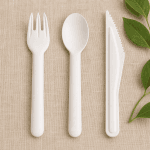
Compostable food utensils are disposable eating tools designed to break down naturally into organic matter under composting conditions without leaving harmful residues behind.
Unlike conventional plastic cutlery, compostable utensils are produced from renewable or biodegradable materials such as:
- Paper
- Wood
- Bamboo
- Bagasse
- PLA bioplastics
- Plant fibers
- Cornstarch-based materials
These products are commonly used as alternatives to traditional plastic:
- Forks
- Spoons
- Knives
- Stirrers
- Wrapped cutlery kits
- Dessert utensils
When disposed of correctly in industrial or home composting systems, compostable utensils can significantly reduce landfill waste and plastic pollution.
Why Businesses Are Switching to Compostable Food Utensils
The transition toward sustainable packaging is accelerating across global food industries.
Several major factors are driving this shift.
Government Plastic Regulations
Many countries now restrict or ban:
- Single-use plastic utensils
- Non-recyclable packaging
- Harmful food-contact chemicals
- Excessive plastic waste
Businesses must adapt to these evolving environmental standards.
Consumer Sustainability Expectations
Modern consumers increasingly prefer eco-conscious brands.
Sustainable packaging helps businesses improve:
- Brand reputation
- Customer loyalty
- ESG performance
- Competitive positioning
Corporate Sustainability Initiatives
International food brands are actively reducing plastic usage and improving environmental responsibility throughout their supply chains.
Compostable food utensils directly support these sustainability goals.
Materials Used in Compostable Food Utensils
Modern compostable cutlery is manufactured using several environmentally responsible materials.
Paper-Based Utensils
Paper cutlery has become increasingly popular due to:
- Renewable sourcing
- Recyclability
- Lightweight design
- Plastic-free composition
Advanced compression technologies improve durability and moisture resistance.
Wooden Utensils
Wooden cutlery is commonly used for:
- Fast food restaurants
- Cafés
- Ice cream shops
- Catering services
Wood provides a natural appearance and biodegradability.
Bamboo Cutlery
Bamboo offers multiple sustainability advantages:
- Rapid renewability
- Strong structural performance
- Premium appearance
- Natural antibacterial properties
Bagasse Cutlery
Bagasse is produced from sugarcane fiber residue.
Benefits include:
- Compostability
- Heat resistance
- Renewable sourcing
- Reduced agricultural waste
PLA Bioplastics
PLA is derived from plant starches such as corn.
PLA utensils provide:
- Lightweight performance
- Plastic-like appearance
- Industrial compostability
However, composting requirements vary depending on local infrastructure.
How Compostable Food Utensils Are Manufactured
Manufacturing compostable cutlery requires advanced engineering and strict food safety standards.
- Sustainable Raw Material Selection
Manufacturers carefully select renewable and food-safe materials.
Key considerations include:
- Compostability
- FSC certification
- Food-contact compliance
- Moisture resistance
- Environmental sustainability
- Material Processing Technologies
Different materials require specialized production methods such as:
- Compression molding
- Fiber molding
- Heat pressing
- Die cutting
- Bioplastic injection molding
- Structural Reinforcement
High-quality compostable utensils must maintain durability during food service use.
Manufacturers optimize:
- Thickness
- Density
- Layer structure
- Surface integrity
- Eco-Friendly Coatings
Some products use sustainable coatings to improve:
- Heat resistance
- Moisture protection
- Oil resistance
Leading manufacturers increasingly use PFAS-free technologies.
- Quality Control and Testing
Professional suppliers conduct extensive testing for:
- Durability
- Food safety
- Compostability
- Hygiene compliance
- Heat performance
Benefits of Compostable Food Utensils
Compostable disposable cutlery provides numerous environmental and commercial benefits.
Reduction of Plastic Pollution
Traditional plastic cutlery contributes heavily to:
- Ocean pollution
- Landfill waste
- Microplastic contamination
Compostable alternatives help reduce long-term environmental damage.
Renewable Resource Usage
Most compostable utensils use plant-based or renewable raw materials.
Improved Waste Management
Under proper composting conditions, these products can decompose naturally into organic material.
Lower Carbon Footprint
Many compostable materials generate lower greenhouse gas emissions than petroleum-based plastics.
Improved Brand Perception
Consumers increasingly support businesses using sustainable packaging solutions.
Compliance with Sustainability Regulations
Compostable utensils help businesses adapt to changing global environmental laws.
Industries Using Compostable Food Utensils
Eco-friendly disposable utensils are now widely used across many industries.
Restaurants and Fast Food Chains
Restaurants increasingly replace plastic cutlery with compostable alternatives.
Coffee Shops and Cafés
Compostable utensils are commonly used for:
- Desserts
- Yogurt
- Pastries
- Beverage service
Food Delivery Platforms
Delivery services use sustainable packaging to improve environmental responsibility.
Hotels and Hospitality
Hotels integrate compostable cutlery into:
- Room service
- Catering events
- Buffet operations
Airline Catering
Airlines seek lightweight and sustainable food service solutions.
Educational Institutions
Schools and universities increasingly adopt environmentally responsible packaging systems.
Key Features of High-Quality Compostable Utensils
Not all compostable products offer the same performance standards.
Businesses should evaluate several important factors.
Structural Durability
Utensils should resist bending or breaking during normal food use.
Food Safety Compliance
Reliable products comply with:
- FDA standards
- EU food-contact regulations
- LFGB certification
- FSC certification
PFAS-Free Production
PFAS-free food packaging has become increasingly important worldwide.
Compostability Certification
Manufacturers should clearly specify whether products are:
- Home compostable
- Industrial compostable
- Biodegradable
Comfortable User Experience
Smooth edges and ergonomic design improve usability and customer satisfaction.
OEM and Private Label Compostable Cutlery
Many businesses seek customized sustainable packaging solutions.
OEM manufacturing services may include:
- Custom dimensions
- Brand printing
- Wrapped cutlery kits
- Retail packaging
- Export packaging systems
Private label compostable products help brands strengthen market differentiation.
Sustainability Trends in Compostable Packaging
The sustainable packaging industry continues evolving rapidly.
PFAS-Free Innovation
Global demand for chemical-free food packaging is increasing significantly.
Premium Sustainable Packaging
Luxury food brands increasingly adopt premium eco-friendly disposable products.
Stronger Compostable Materials
Manufacturers continue improving material strength and moisture resistance.
Smart Sustainable Packaging
Digital integration and QR-based packaging experiences are becoming more common.
Rapid Global Market Growth
Demand for compostable food utensils continues growing across:
- Europe
- North America
- Australia
- Middle East
- Asia-Pacific markets
Challenges in Compostable Food Utensil Adoption
Despite rapid industry growth, several challenges remain.
Higher Production Costs
Compostable materials may still cost more than traditional plastics.
Composting Infrastructure Limitations
Some regions lack industrial composting systems.
Consumer Disposal Education
Consumers may misunderstand correct composting practices.
Product Performance Expectations
Low-quality products can negatively affect customer experience.
Reliable suppliers and strong quality standards are essential.
The Future of Compostable Food Utensils
The future of disposable food packaging is becoming increasingly sustainable.
Expected developments include:
- Fully compostable barrier technologies
- Carbon-neutral manufacturing
- Advanced recyclable coatings
- Zero-waste production systems
- AI-supported manufacturing optimization
As sustainability regulations continue expanding globally, compostable food utensils will become a standard component of responsible food service operations.
Conclusion
Compostable food utensils are transforming the global food packaging industry by offering environmentally responsible alternatives to traditional plastic cutlery. Businesses across the food service sector are increasingly adopting sustainable disposable utensils to meet regulatory requirements, improve customer perception, and reduce environmental impact.
High-quality compostable utensils provide:
- Reduced plastic pollution
- Renewable material usage
- Food safety compliance
- Improved sustainability branding
- Eco-friendly waste management solutions
As global demand for sustainable packaging continues growing, compostable food utensils will remain one of the most important innovations shaping the future of environmentally responsible food service packaging.