OEM Paper Cutlery Manufacturing: The Complete Procurement Guide for Food Brands, Importers and Retailers
On this page
Executive Brief
The disposable cutlery market is undergoing a fundamental transformation.
For decades, food brands primarily focused on sourcing products that were inexpensive, widely available and operationally reliable. Packaging decisions were typically driven by production efficiency rather than sustainability strategy.
Today, procurement priorities are changing.
Retailers are demanding more sustainable packaging solutions.
Consumers are paying greater attention to packaging materials.
Governments are implementing policies designed to reduce unnecessary plastic consumption.
At the same time, private label programs continue expanding across global markets.
These trends are driving unprecedented interest in OEM paper cutlery manufacturing.
Food brands increasingly seek custom paper spoon, paper fork and paper knife solutions capable of supporting:
- Sustainability goals
- Retail requirements
- Packaging differentiation
- Consumer expectations
- Long-term procurement strategies
As a result, OEM paper cutlery manufacturing has evolved from a niche production model into a strategic procurement tool.
This guide explains how OEM paper cutlery manufacturing works, why demand continues growing and how organizations can select the right manufacturing partner.
The Global Shift Toward Custom Packaging
One of the most important developments in food packaging is the movement away from standardized products.
Historically, many organizations purchased generic packaging solutions because customization was expensive and often unnecessary.
Today the market environment is different.
Brands increasingly compete on:
- Sustainability
- Consumer experience
- Packaging innovation
- Retail acceptance
- Product differentiation
This creates demand for custom packaging solutions.
OEM manufacturing allows companies to move beyond generic products and create solutions aligned with specific business objectives.
Sustainability as a Procurement Driver
Sustainability is no longer a marketing initiative.
It is increasingly a procurement requirement.
Many organizations maintain public commitments regarding:
- Plastic reduction
- Responsible sourcing
- ESG reporting
- Sustainable packaging
OEM manufacturing helps integrate these objectives directly into product development.
Retail Pressure
Retailers increasingly evaluate suppliers according to environmental performance.
Packaging decisions often influence:
- Supplier approval
- Product placement
- Sustainability reporting
This trend encourages investment in custom paper cutlery programs.
Private Label Expansion
Private label products continue growing worldwide.
OEM manufacturing provides the flexibility needed to support retailer-owned packaging programs.
This creates significant opportunities for manufacturers capable of supporting customized production.
What Is OEM Paper Cutlery Manufacturing?
OEM stands for Original Equipment Manufacturer.
In practical terms, OEM manufacturing refers to producing products according to customer specifications rather than supplying generic catalog items.
For paper cutlery, this means manufacturers can develop solutions aligned with:
- Product applications
- Packaging requirements
- Sustainability objectives
- Brand strategies
OEM manufacturing allows organizations to influence how products are designed, produced and supplied.
This creates advantages that generic sourcing often cannot provide.
OEM vs ODM vs Private Label
These terms are frequently confused.
However, they describe different approaches.
OEM Manufacturing
The customer defines specifications.
The manufacturer produces according to those requirements.
ODM Manufacturing
The manufacturer develops the product.
The customer adapts branding and market positioning.
Private Label
Products are sold under the buyer’s brand.
Many private label programs use OEM production.
Understanding these distinctions helps buyers select the most appropriate strategy.
Why Food Brands Prefer OEM Production
Several factors explain growing demand for OEM paper cutlery.
Greater Product Control
Brands gain influence over:
- Dimensions
- Packaging compatibility
- Product functionality
Sustainability Integration
OEM manufacturing allows organizations to align products with sustainability commitments.
Brand Differentiation
Custom packaging helps products stand out in competitive markets.
Procurement Flexibility
Organizations can adapt products according to evolving requirements.
This flexibility becomes increasingly valuable as markets change.
Paper Spoon OEM Manufacturing
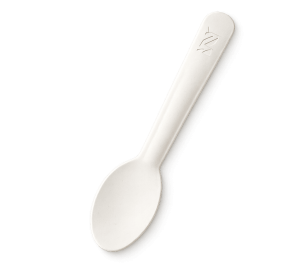
Paper spoons remain the largest OEM paper cutlery category.
Applications include:
- Ice cream
- Dairy desserts
- Deli foods
- Children’s products
- Ready meals
Many brands seek custom paper spoon solutions because the spoon is highly visible to consumers.
This visibility makes it an effective sustainability communication tool.
Relevant solution:
OEM Paper Spoon Manufacturer
Paper Fork OEM Manufacturing
Paper forks are increasingly adopted in:
- Salads
- Food service
- Catering
- Ready meals
OEM production allows organizations to optimize products according to specific applications.
Demand is expected to grow as sustainability expectations continue increasing.
Paper Knife OEM Manufacturing
Paper knives remain a smaller but important category.
Applications include:
- Meal kits
- Airline catering
- Food service
- Sustainable disposable cutlery sets
As paper cutlery programs expand, demand for paper knives is expected to increase alongside spoons and forks.
FSC Certified OEM Paper Cutlery Manufacturing
As sustainability expectations continue increasing, OEM manufacturing and FSC certification are becoming increasingly interconnected.
Historically, OEM projects focused primarily on functionality, dimensions and production efficiency.
Today, buyers frequently expect OEM manufacturers to support broader sustainability objectives as well.
This is particularly true in European markets.
Procurement teams increasingly ask:
- Is FSC-certified sourcing available?
- Can sustainability documentation be provided?
- Does the manufacturer understand responsible sourcing frameworks?
- Can sustainability claims be verified?
These questions influence supplier selection decisions.
Why FSC Matters in OEM Projects
OEM manufacturing provides customization.
FSC certification provides sourcing credibility.
Together they create a powerful value proposition.
Benefits include:
Responsible Sourcing
Organizations gain greater confidence regarding material origin.
Retail Acceptance
Retailers increasingly prefer suppliers capable of supporting sustainability initiatives.
Procurement Confidence
Certification reduces sourcing uncertainty.
ESG Reporting Support
Many organizations include sourcing information within sustainability reporting frameworks.
For these reasons, FSC-certified OEM paper cutlery solutions continue gaining momentum.
The OEM Manufacturing Workflow
Many buyers assume OEM manufacturing begins when a purchase order is issued.
In reality, professional OEM projects follow a structured process.
Step 1: Concept Development
The buyer defines objectives.
Questions typically include:
- What application will the product serve?
- What sustainability goals exist?
- What packaging constraints apply?
This stage establishes project direction.
Step 2: Product Specification
Detailed requirements are defined.
Examples include:
- Dimensions
- Packaging format
- Material requirements
- FSC preferences
- Commercial objectives
This stage reduces ambiguity.
Step 3: Production Planning
The manufacturer evaluates:
- Capacity
- Materials
- Lead times
- Production schedules
Effective planning improves consistency and reliability.
Step 4: Quality Inspection
Quality control remains essential.
Inspection criteria may include:
- Appearance
- Dimensions
- Packaging quality
- Production consistency
Organizations increasingly prioritize quality stability over short-term cost reductions.
Step 5: Export Preparation
International buyers require:
- Documentation
- Packaging standards
- Shipping coordination
- Communication support
Strong manufacturers understand these requirements.
Why European Importers Prefer OEM Manufacturing Partners
European importers increasingly seek manufacturers capable of supporting customized projects.
Several factors explain this trend.
Germany
German buyers frequently emphasize:
- Documentation
- Process control
- Sustainability
- Long-term reliability
OEM manufacturing aligns well with these priorities because it provides greater control.
Netherlands
Dutch importers often serve multiple European markets.
OEM flexibility helps accommodate diverse customer requirements.
Scandinavia
Scandinavian markets continue emphasizing sustainability leadership.
Customized paper cutlery programs support these objectives.
France
Consumer expectations increasingly influence packaging decisions.
OEM manufacturing helps brands align packaging with market preferences.
United Kingdom
Retail-driven sustainability initiatives continue encouraging customized solutions.
OEM capability often becomes a competitive advantage.
Procurement Checklist for OEM Paper Cutlery Projects
Before selecting a manufacturing partner, buyers should evaluate several areas.
Manufacturing Capability
Can future demand be supported?
Product Development Expertise
Can the supplier support customized projects?
Sustainability Capability
Are FSC-certified sourcing options available?
Export Readiness
Can international markets be supported?
Communication Standards
Is the supplier responsive and transparent?
Quality Systems
Can production consistency be maintained?
Scalability
Can growth requirements be accommodated?
Organizations evaluating all these factors generally achieve stronger outcomes.
Red Flags When Choosing an OEM Paper Cutlery Supplier
Professional buyers should pay attention to warning signs.
No OEM Experience
Customization requires expertise.
Suppliers without OEM experience may struggle to support complex projects.
No Product Development Capability
Product development remains essential for successful OEM programs.
Weak Sustainability Documentation
Documentation increasingly influences procurement decisions.
Limited Export Experience
International supply requires operational expertise.
Poor Communication
Communication quality frequently predicts future supplier performance.
Inconsistent Quality Systems
Quality instability creates procurement risk.
Case Study: Ice Cream Brand
A premium ice cream company wanted to reduce plastic consumption while maintaining a high-quality consumer experience.
The company evaluated multiple suppliers.
Key criteria included:
- Sustainability capability
- OEM flexibility
- Export reliability
The selected OEM manufacturer developed a paper spoon solution aligned with both sustainability objectives and product requirements.
Benefits included:
- Improved sustainability messaging
- Stronger retailer discussions
- Better brand differentiation
Case Study: Food Service Distributor
A distributor supplying food service operators sought private label sustainable cutlery products.
OEM manufacturing provided:
- Custom product development
- Greater differentiation
- Improved margins
- Better customer retention
The result was a more competitive product portfolio.
Case Study: Children’s Product Manufacturer
A manufacturer producing surprise egg-style products sought alternatives to conventional plastic spoons.
OEM paper spoon development enabled:
- Plastic reduction
- Improved sustainability positioning
- Stronger retailer engagement
This category continues representing one of the strongest opportunities for paper spoon adoption.
Future Outlook: OEM Paper Cutlery Through 2030
Several trends are expected to shape the market.
Increased Sustainability Requirements
Greater FSC Adoption
Growth of Private Label Programs
Expansion of OEM Manufacturing
Increased Retail Influence
Stronger Supply Chain Transparency Expectations
Organizations investing early in OEM paper cutlery programs may gain competitive advantages as these trends accelerate.
Frequently Asked Questions
What is OEM paper cutlery manufacturing?
Producing paper cutlery according to customer requirements rather than supplying standard catalog products.
Why are food brands choosing OEM production?
To gain greater control over product design, sustainability and packaging compatibility.
Can OEM projects support FSC-certified sourcing?
Yes.
Many manufacturers support FSC-certified OEM solutions.
What products can be customized?
Paper spoons, paper forks and paper knives can all be customized.
Why do importers prefer OEM suppliers?
Because customization helps address market-specific requirements.
Are OEM paper cutlery programs suitable for private label brands?
Yes.
Private label programs often depend on OEM production.
Which industries benefit most?
Ice cream, dairy desserts, food service, children’s products and sustainable packaging categories.
Why VAV Paper
VAV Paper supports OEM paper cutlery projects through:
- Paper Spoon Manufacturing
- Paper Fork Manufacturing
- Paper Knife Manufacturing
- FSC-Oriented Sourcing
- Export-Focused Production
- Sustainable Packaging Expertise
Applications include:
- Ice Cream Packaging
- Deli Foods
- Children’s Products
- Food Service
- Sustainable Disposable Cutlery
Final CTA
Looking for an OEM Paper Cutlery Manufacturing Partner?
Explore:
- Paper Cutlery Manufacturer
- Paper Spoon Manufacturer
- OEM Paper Spoon Manufacturer
- FSC Paper Spoon
- Paper Spoon for Kids
Request a Quote:
The future of disposable cutlery will be shaped by organizations capable of combining sustainability, customization and supply-chain reliability.
OEM paper cutlery manufacturing sits at the center of that transformation.